The Bigger Picture by Karen Floyd·24 November 2026
Three Foundations Shift: Is Something Larger Happening?
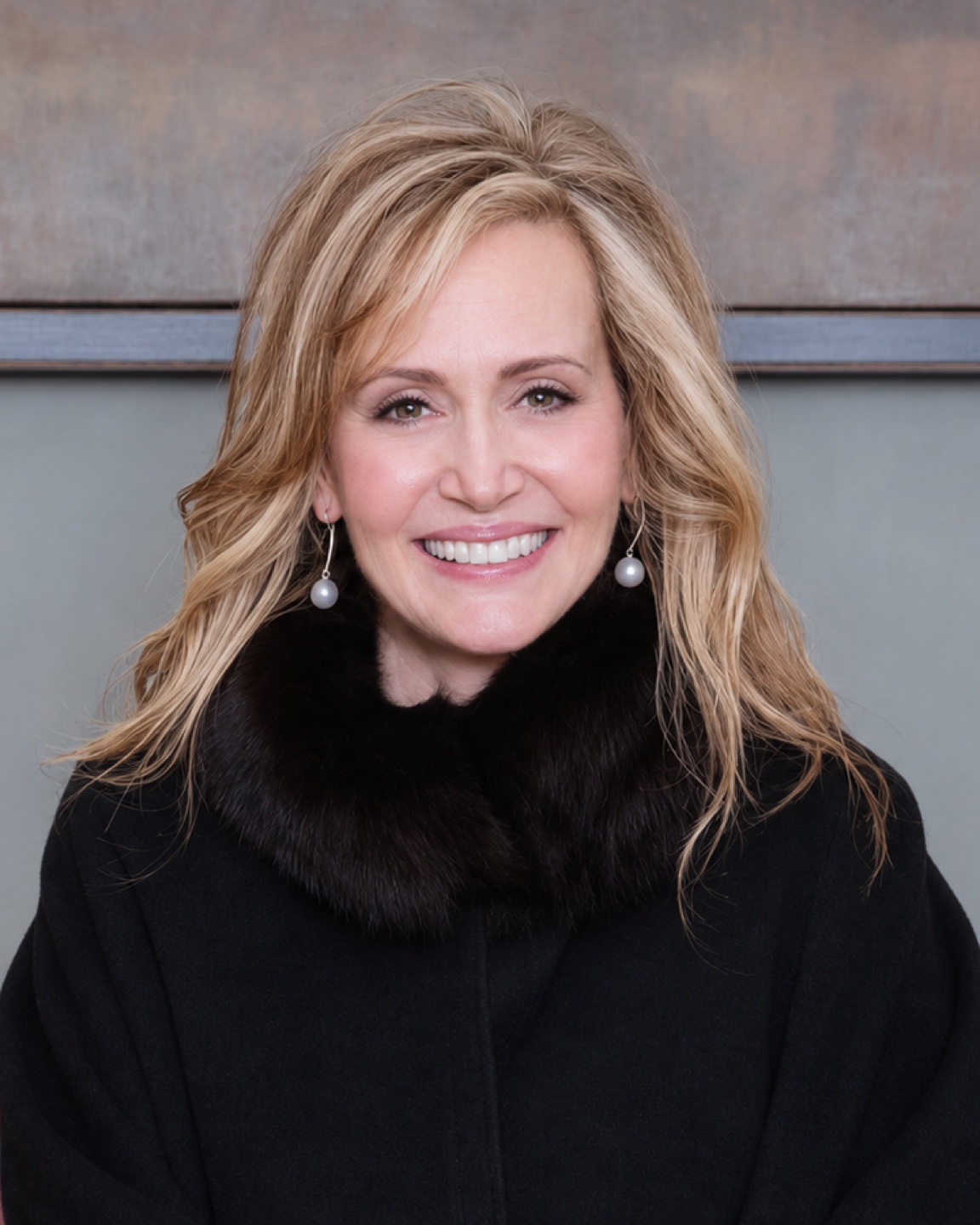 By Karen FloydFounder and publisher of ELYSIAN
There is a particular stillness that settles over a face when the ordinary foundations of life shift. You see it in the way eyes hold—not with panic, but with a quiet, watchful fatigue. The mouth stays neutral. The shoulders settle a fraction lower. It is the hollow look of people whose faith in the institutions they once trusted has quietly eroded—who have begun to wonder, without quite saying it aloud, whether there is anything that can still be counted on.
On November 12, we experienced the first fracture. According to Microsoft, a latent software bug combined with reduced server capacity triggered failures across Outlook, Teams, and Copilot. For users in more than 70 countries, more than 80 percent of the affected servers were unresponsive. Businesses lost email and meeting tools. Governments and hospitals improvised. For millions of people the ordinary digital tools of work simply went dark.
The next day, November 13, I was in a Florida airport heading home when the airlines stopped. On their phones, the notices arrived one by one: a telecommunications failure had triggered a rare nationwide FAA ground stop. I watched the terminals fill with people who had nowhere to go and no clear answer about when that might change. I noticed the surprise cross their faces, followed almost immediately by private calculation of how to solve their own transportation problem. Some called, some texted, some worked the apps with focused diligence, searching for any solution that would get them out. The quick-witted moved fast; on a visceral small scale it was survival of the fittest. Those who could move fastest jumped to the top of the baggage line and claimed all the taxis and Ubers. Many who had arrived with excitement and purpose slowly emptied into a hollow acceptance. I watched the elderly, less fluent with the technology the moment suddenly required, stand a little longer, a little more uncertain, a little more isolated and alone. Conversations that began as complaints about logistics softened into something quieter—a heavy realization that something else was fraying.
I wondered if this was symptomatic of something larger.
Five days later, back in Spartanburg, the water stopped. On the morning of November 18, during a staff meeting, alerts came across our phones: a power interruption lasting less than a minute had produced a hydraulic surge that damaged a main distribution line, leaving over 100,000 customers without water service. A systemwide boil-water advisory followed. Schools closed. Hospitals adjusted. Neighbors filled containers at distribution points.
I am not a conspiracy theorist, but for the first time in my life I experienced three system-wide breakdowns—digital, aviation, and water—within a single week. I found myself asking the same question I heard in the Florida terminal and later saw in my teammates’ eyes: are we watching something larger announce itself?
The question is real. Aging infrastructure, under-investment, single points of failure, and the quiet accumulation of latent defects are documented realities. Yet the deeper unease is not merely about servers, pipes, and routers. It is the cumulative sense that the invisible agreements that hold daily life together can fail with very little warning. When that happens, something shifts in how people look at one another.
Under ordinary conditions most of us operate from a baseline of enough—enough time, enough hope, enough stability that another person’s success does not feel like a direct subtraction from our own. Stress changes the arithmetic. When the ground feels less solid, scarcity thinking arrives quickly. We protect what remains of our options. We scan the room for who might move past us. We measure others’ proximity as threat rather than possibility. Women, long practiced at reading relational temperature and carrying the weight of others’ well-being, often feel this pressure acutely. The fear is rarely named out loud. It lives in the tightened smile, the slightly faster pace, the careful calibration of how much help we offer when we ourselves feel unsteady.
The events of the past two weeks made the pattern visible. In offices and inboxes, the Microsoft outage forced abrupt workarounds and quiet frustration. In the airports, people who would normally chat across rows grew quiet and protective of their remaining options. In Spartanburg, no local stores had water to sell, so neighbors quietly scouted for supplies, and some lined up for water and, for a few days, measured how much they had left. None of it was dramatic. It was ordinary human wiring under strain.
Yet the very questions these failures raise—about what is fraying, about what we can still count on—should make us kinder, not harder, to one another. They should widen the circle rather than close it. The only foundations that remain fully within our power are how we treat the person standing next to us in the terminal, the colleague whose email has vanished, or the neighbor filling a container beside us.
Choosing openness is not naïve optimism. It is a practical decision about the kind of people we intend to be when the foundations shake. It requires working from a place of abundance even when the evidence of scarcity is sitting in front of us: the canceled flight, the empty inbox, the empty tap, the look in someone else’s eyes. Abundance here is not the denial of limits. It is the refusal to let those limits become the only story we tell about each other. It is the choice to keep the door open, the recommendation honest, the hand extended, precisely because the ground feels less certain.
I cannot predict the future. I do not know whether the next disruption will be larger or smaller. I do know that the faces I have seen lately are asking a quiet, collective question: what can still be counted on? The answer we give one another—whether we tighten or whether we stay open—will shape more of what comes next than any single repair to a server, a pipe, or a router. The questions themselves are an invitation: to choose kindness while the answers remain unfinished.
With much love,

Karen Floyd,
ELYSIAN Publisher & Founder