
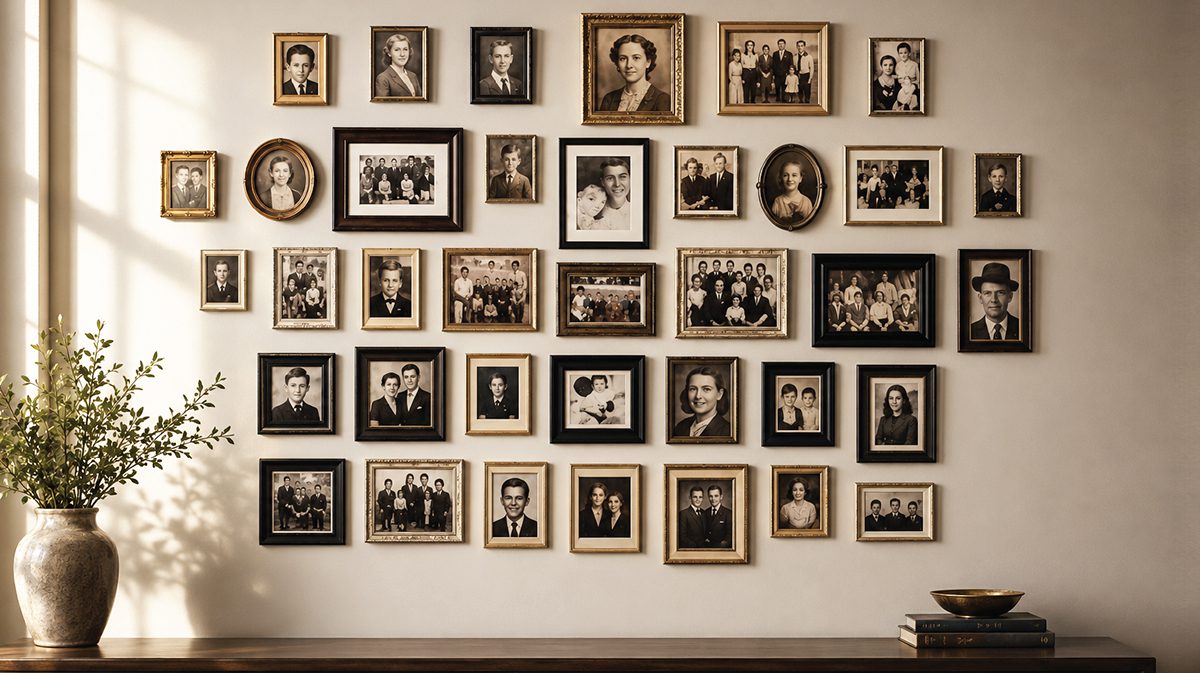
Long before we understand who we are, our families are quietly teaching us.
We learn what love looks like by watching the people who raised us. We learn what success means from the expectations placed upon us. We learn how to apologize, how to argue, how to celebrate, how to endure. We inherit recipes and rituals, expressions and stories, holiday traditions and family jokes. We inherit the things our families proudly pass down, but also the things no one ever discusses.
We inherit far more than a surname.
Some inheritances feel like gifts. A grandmother’s generosity. A father’s work ethic. A mother’s fierce independence. The ability to make everyone feel welcome around a dinner table. A tradition of giving back. A belief that family shows up, especially when it is difficult.
Other inheritances are heavier.
Fear can be inherited. So can perfectionism. Anxiety. Resentment. The belief that vulnerability is weakness or that asking for help is failure. We can inherit the tendency to remain silent to keep the peace, to overachieve in order to feel worthy, or to confuse sacrifice with love.
And perhaps the most complicated inheritance of all is the one we don’t realize we’re carrying.
We become adults and discover ourselves repeating phrases we once resented hearing. We react to our children in ways that remind us of our own childhood. We find ourselves making choices based on rules we never consciously agreed to. Sometimes it takes years to recognize that what we considered “just the way things are” was simply the way things were in our family.
That realization can be uncomfortable. It can also be liberating.
Growing up means learning to distinguish between what we were given and what we were meant to keep.
There is tremendous wisdom in honoring where we came from without allowing it to determine where we are going. We can preserve the Sunday dinner without preserving the silence that surrounded it. We can cherish our parents while choosing a different way of communicating with our own children. We can respect tradition without becoming prisoners of it.
Breaking a family pattern is not necessarily an act of rejection. Sometimes it is an act of love.
Because every generation has an opportunity to edit the inheritance.
We decide which stories deserve another telling. Which traditions deserve another century. Which values should remain at the center of the family. And which fears, judgments, expectations, and wounds should end with us.
Perhaps this is what legacy truly means.
Not simply leaving something behind, but consciously deciding what is worth carrying forward.
One day, the people who come after us will inherit something from us, too. They will remember the words we repeated, the way we treated people, the traditions we created, the apologies we offered, the courage we demonstrated, and the love we made visible.
They will inherit our choices.
And that may be the most profound inheritance of all: the opportunity to give the next generation not a perfect family, but a more conscious one.
Because we cannot choose everything we inherit.
But we can choose what ends with us.