
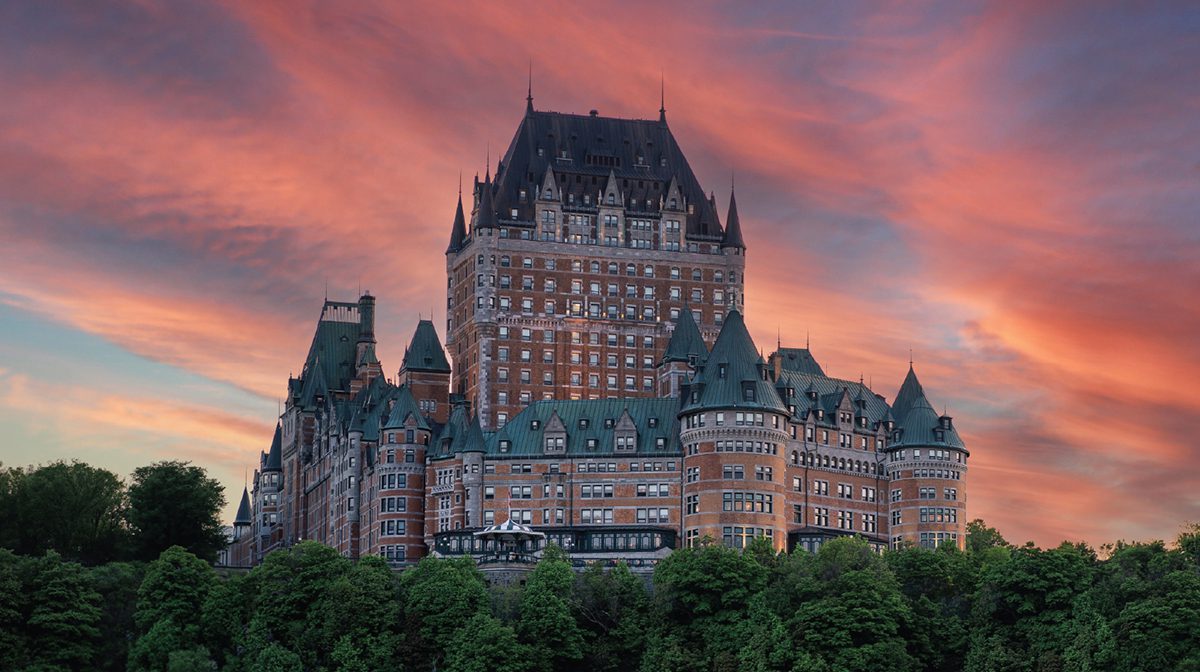
Few hotels in the world are as instantly recognizable as Fairmont Le Château Frontenac. Rising dramatically above Old Québec from Cap Diamant, its copper roofs, soaring turrets, and castle-like silhouette have made it one of the world’s most photographed hotels. While many visitors assume it was once a royal palace, the truth is just as fascinating: it was built from the very beginning as a luxury hotel designed to attract travelers crossing Canada by rail.
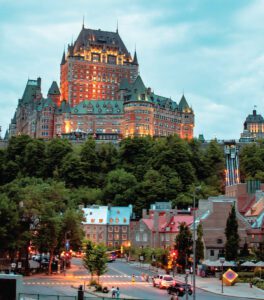 The vision came from William Cornelius Van Horne, the energetic president of the Canadian Pacific Railway. In the late 1800s, Van Horne believed magnificent hotels would encourage wealthy tourists to ride the railway and explore Canada’s spectacular destinations. Château Frontenac, which opened in 1893, became one of the railway’s grand hotels and was named after Louis de Buade, Comte de Frontenac, the celebrated governor of New France. The original architect, Bruce Price of New York, designed the hotel in the romantic Châteauesque style, inspired by the grand French Renaissance castles of the Loire Valley. Over the following decades, additions—including the iconic central tower completed in 1924 by architects Edward and William Sutherland Maxwell—created the breathtaking skyline recognized around the world today.
The Château has welcomed an extraordinary list of distinguished guests. Royal visitors have included King George VI and Queen Elizabeth during their landmark 1939 Canadian tour, while later visits by Queen Elizabeth II, Princess Grace of Monaco, and numerous members of the British Royal Family added to its regal reputation. Political leaders from around the globe have also stayed here, including Charles de Gaulle, Chiang Kai-shek, and generations of Canadian and American leaders.
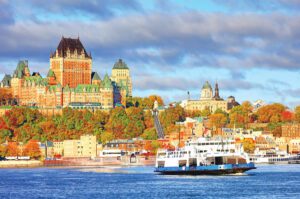 Perhaps the hotel’s greatest moment in history came during the Second World War. In August 1943 and again in September 1944, Winston Churchill, Franklin D. Roosevelt, and Canadian Prime Minister William Lyon Mackenzie King met at the Château during the Québec Conferences. Behind closed doors, Allied leaders discussed critical military strategy, including plans that helped shape the D-Day invasion of Normandy and the eventual defeat of Nazi Germany. Few luxury hotels can claim to have played such an important role in world history.
Many visitors admire the exterior without noticing remarkable details inside. The soaring lobby features elegant carved woodwork, historic stone, and decorative flourishes celebrating Québec’s French heritage. Beneath the hotel lie the archaeological remains of the Saint-Louis Forts and Châteaux, former residences of French and British governors dating back more than 400 years. Carefully preserved artifacts displayed throughout the property connect guests with centuries of Canadian history beneath their feet.
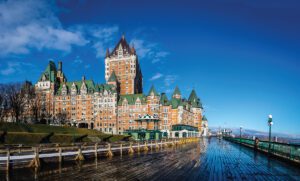 Like many grand historic hotels, Château Frontenac has inspired its share of ghost stories. Staff and guests have long shared tales of seeing the spirit of Count Frontenac wandering the halls or gazing silently from windows overlooking the St. Lawrence River. Although there is no evidence these sightings are real, the legends have become part of the hotel’s enduring mystique and continue to intrigue visitors.
From its railway beginnings to wartime diplomacy and royal visits, Fairmont Le Château Frontenac is far more than an elegant place to stay. It is a living landmark where architecture, history, and legend come together, making every tower, corridor, and hidden corner part of one of Canada’s most remarkable stories.