
In the heart of Old Québec, where centuries-old stone buildings surround a charming public square overlooking the St. Lawrence River, one of North America’s most important chapters began. Place Royale is widely recognized as the birthplace of French civilization in North America, the site where Samuel de Champlain established Québec in 1608 and where a small trading settlement grew into the center of French influence on the continent.
When Champlain arrived at this location on July 3, 1608, he chose the area because of its strategic advantages. The narrow point of the St. Lawrence River provided an ideal location for controlling trade routes and establishing a permanent French presence. Here, Champlain founded the Habitation de Québec, a fortified settlement that served as both a trading post and the foundation of what would become Québec City. Although the original structure no longer stands, the significance of the site remains deeply connected to the origins of New France.
 The settlement developed around what is now Place Royale, which became an important commercial and social gathering place. During the 17th and 18th centuries, merchants built stone houses around the square, creating one of the most distinctive architectural environments in Québec. These buildings reflected the traditions of French urban design, with narrow streets, steep roofs, and masonry construction adapted to the region’s harsh winters.
At the center of the square stands Notre-Dame-des-Victoires Church, one of the oldest stone churches in North America. Construction began in 1687 on the site of Champlain’s original settlement, and the church was completed in 1723. Its name commemorates French victories over British forces, including the successful defense of Québec in 1690 and the recovery of the settlement after the failed British attack of 1711. Today, its historic façade and intimate interior provide a powerful connection to Québec’s colonial past.
Over time, Place Royale experienced dramatic changes. After the British conquest of New France in 1760, the area remained an important commercial district but gradually declined as the city expanded elsewhere. By the 19th and early 20th centuries, many of the historic buildings had deteriorated, and the neighborhood lost much of its former prominence.
Beginning in the 1960s, a major restoration effort transformed Place Royale. Historians, architects, and preservationists worked to restore the square’s historic character by carefully rebuilding and preserving many of its centuries-old buildings. The project helped revive one of Québec City’s most remarkable historic areas and contributed to the preservation of Old Québec, which was later designated a UNESCO World Heritage Site in 1985.
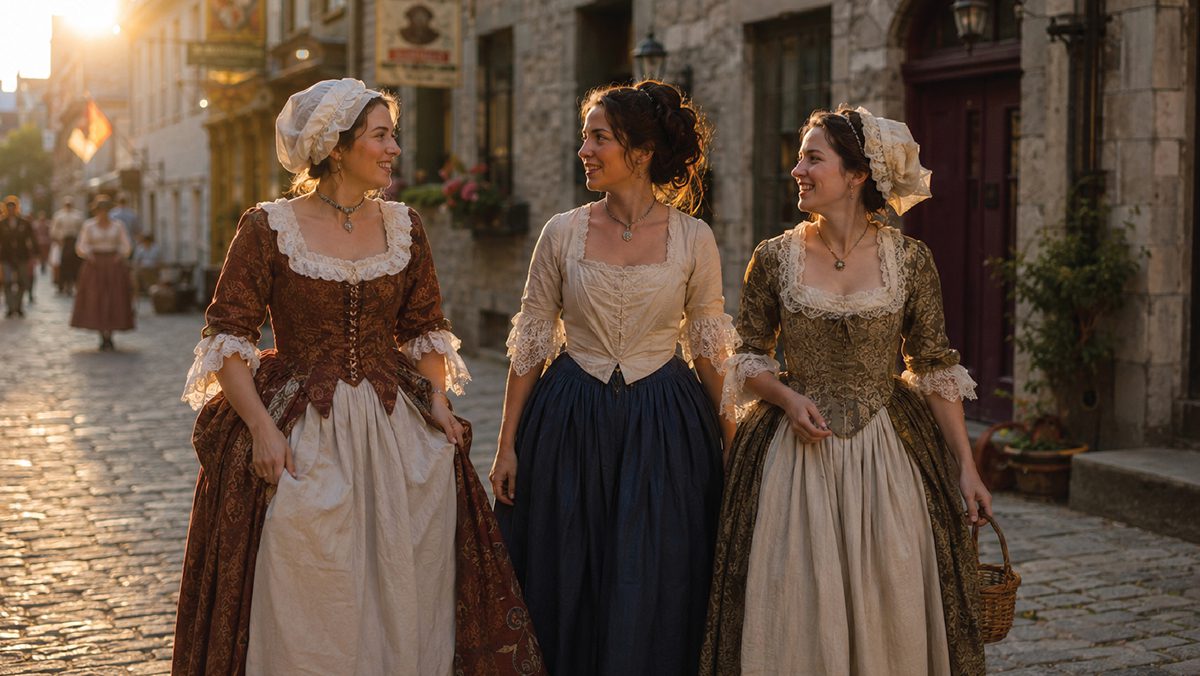
In August 2026, visitors arriving in Old Québec during Les Fêtes de la Nouvelle-France from August 6 to 9 will experience the city’s French colonial heritage brought vividly to life. The festival celebrates the era of New France through historical reenactments, traditional clothing, music, performances, and activities throughout the historic district. For those standing in Place Royale during this celebration, the experience carries special meaning: this is not simply a recreated past, but the actual place where French North America began.
Today, Place Royale offers a rare opportunity to walk through living history. Every stone façade, narrow lane, and riverside view tells the story of explorers, merchants, settlers, and generations who shaped the future of Québec and the broader history of North America. It remains a place where the beginnings of a civilization can still be seen, felt, and remembered.