
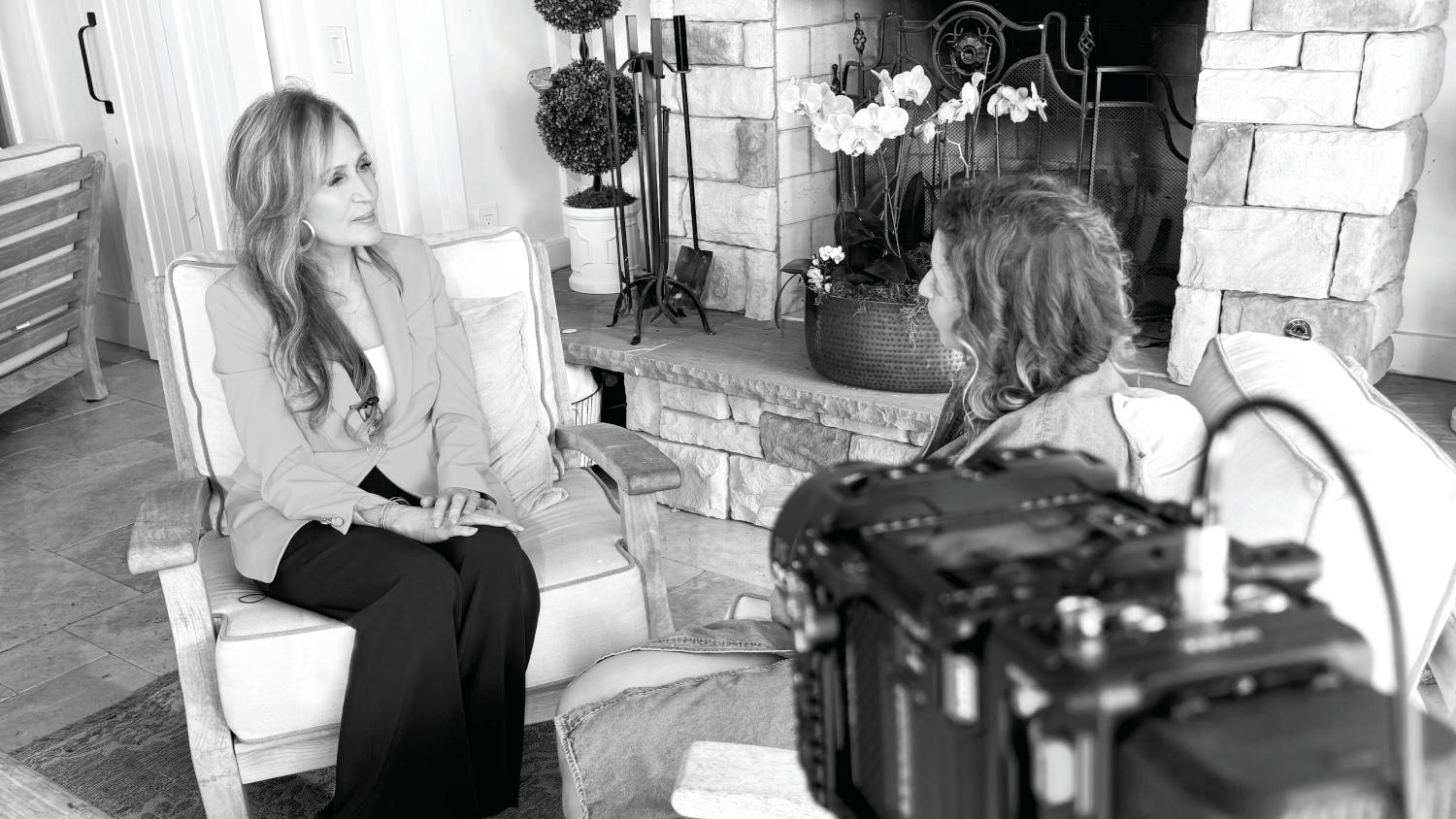
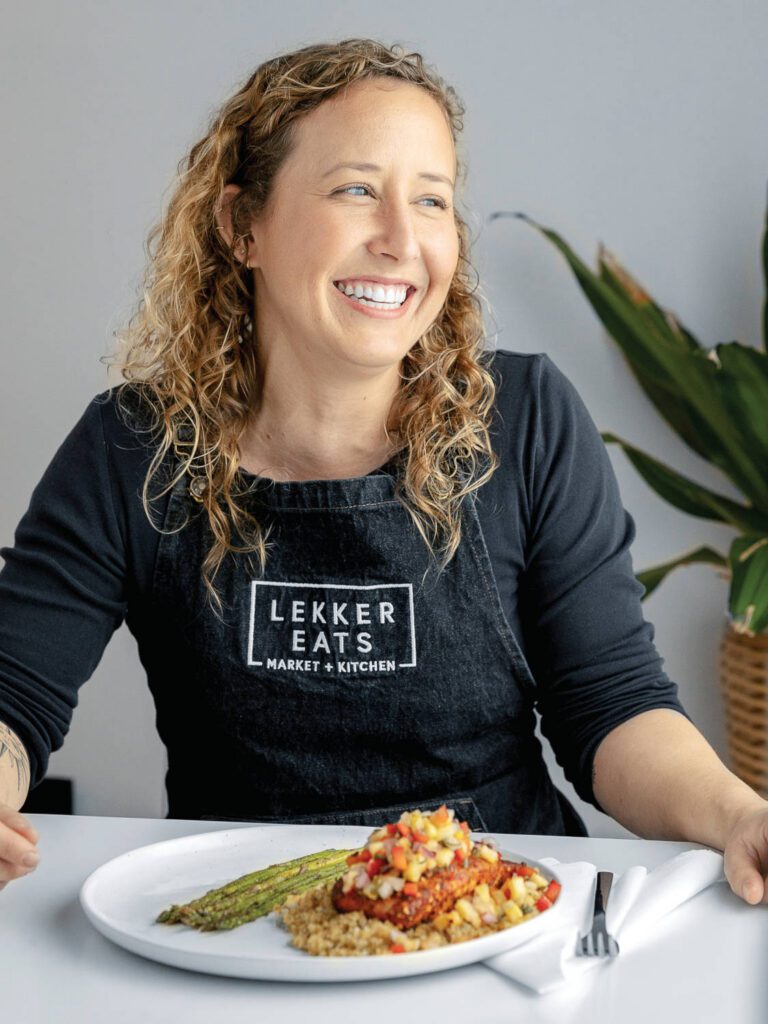
Some journeys take people around the world only to reveal that home was waiting for them all along. For JORDAN HEYD, that journey began with a one-way ticket, a career aboard luxury yachts and an insatiable curiosity about the world beyond South Carolina. It carried her across oceans, through bustling ports and into the demanding kitchens of some of the world’s most exclusive vessels before an unexpected diagnosis of type 1 diabetes changed everything. Instead of surrendering her dream, she reinvented it, studying culinary arts in South Africa, returning to the sea as a yacht chef and ultimately bringing those global experiences back to Myrtle Beach. Today, the founder of Lekker Eats has built far more than a successful restaurant. She has created a place where adventurous flavors, local ingredients and heartfelt hospitality tell the story of a woman who refused to let circumstance define her path.
You left Myrtle Beach, South Carolina, to chase a dream, to travel the world. Did you ever expect to return to South Carolina?
No. But as my life has played out, it all makes sense. I had such a drive, a passion, a wonder for the world. I did not see myself settling anywhere because the word “settling” scared me. Did I think I would be back in Myrtle? The answer is “no,” because that would mean that I settled. Now that I am older, I realize that “settling” is actually one of our greatest gifts. It is a little crazy to think I returned home, but in the same breath, I cannot envision myself being anywhere else.
How did you enter the vocation of yachting—a big leap from being a student in college.
At the College of Charleston, I majored in arts management and a double minor in studio art and theater; I never used any of the majors. I had a friend who instead of going to college went into yachting. I called her and asked what I needed to do to get started. I thought it was incredible to get paid to travel. She gave me the information I needed. Two weeks after graduation, I sold my car, bought a one-way ticket to Fort Lauderdale and paid for my yachting class, which was five days long. Three days after finishing school, I got my first job and started traveling the world. Even though it was a big jump, I was able to explore, which was what my heart was set on at that time.
You were unencumbered, no boyfriend, no fiancé, no husband and no children. It was just you.
It was just me and my suitcase, which was always too heavy. I was 22 years old, excited to see the world and the unknown. I wanted to meet as many people as possible from different walks of life and experience their cultures. I wanted to remove myself from the safety of home, where my family had always been known, and go somewhere new and make a name for myself.
What did your parents say when you said you wanted to become a Yachty?
They have supported everything that I have ever chosen to do. And as I have aged, and success has followed, they have become more supportive. Now they recognize that I do things a little differently, but I always stay true to my roots and the foundation that they instilled in me.
Unconditional support meant that they took a few deep breaths before I did anything. As unknown as it was for me, it was even more unknown for them. I think they thought I was crazy, which is completely fair. Now that I do have a son, I think, “Oh my gosh, is he going to be like me?” because I do not know if I am ready for the other side of the coin now.
How did you secure your first job and in your yachting adventure?
I randomly applied for a yacht job online and was hired.
Did you have a permanent residence?
No, we lived full-time on the boat. The only time we did not live on the boat was when it was docked at the shipyard, at which point they secured a crew house for us to live in. If conditions were not livable, we would get off the boat and they would also provide us with housing.
Can you describe the interpersonal dynamics aboard a yacht?
My favorite thing about yachting was not just the places that we experienced but the crew members who became your family. I served with people from South Africa, UK, Australia, and New Zealand. We rarely had another American on the boat. Imagine what happens when you throw a multinational crew into tight quarters, all raised very differently, with diverse lifestyles, and say “good luck.” It is an adventure.
Did you make lifelong friendships?
Yes. The hardest part about being home is missing them. They are scattered everywhere. Some are still yachting, others live in Florida, South Africa, New Zealand, and Australia. I made some of my best friends from all over the world and had the most fun. They were with me during some of the biggest changes in my life, as I learned to grow on my own. You can imagine the crazy situations we saw being around so much money and also no money at all. It transformed me. We were growing into who we are, side by side, trying to figure life out, on a really nice yacht while traveling the world.
Were the chefs exceptional?
I have imposter syndrome when calling myself a chef because I worked under and have seen some of the most incredible chefs in the world. They deserve all the accolades and honors that they will probably never receive because they are hidden on a boat somewhere, working way too hard. I have so much respect for them. On every boat that I worked I became friends with the chef.
What happened in Italy?
I had never been to Italy before, and it was so beautiful. We were Day 65 on the yacht and had no days off, working 14 to 16 hours a day. We wanted the guests to have the best vacation of their life. And unfortunately, it was to the detriment of myself. I was drinking 15 bottles of water a day, constantly had a cotton mouth, and could barely hold my bladder. I was exhausted to the point it felt like bricks were tied to me. I could not figure out what was going on. I just knew that something was not right. I finally went up to my captain one evening before service and said, “Captain Dan, something’s wrong with me.” The thought of being a hiccup for the crew is, oh my God, the worst thing that could possibly happen. He told me to go down to my cabin and gave me the option of turning the boat around that night and returning to the Port of Capri or waiting until the next morning when the guests deboard the boat and taking me to the hospital in Catania, Italy, at the bottom of the boot. I said, “We are not turning the boat around.” I woke up the next morning and could barely walk up the stairs.
Not one spoke English at the hospital, so they sent a translator, Galina, with me. I remember laying on the floor with my head in her lap and I did not even know this woman. As a child, my mom would give me chocolate whenever I was sick to make me feel better. I told Galina that chocolate made me feel better, so she found a vending machine and bought a bag of M&M’s. When the doctor and nurses came in to take blood samples, they pricked my finger and proceeded to snatch the chocolate out of my hand, all shouting in Italian. It turns out my blood sugar was over 600, which is super dangerous. I could only recognize and understand one word: diabetes.
Apparently, my body was in such a state of fatigue and exhaustion that my white blood cells attacked my beta cells and basically my pancreas kicked the bucket.
How long did it take for you to understand what was needed to live with type 1 diabetes?
I had to relearn how to live life. Everything. I have one gadget here (points to arm) and I have an insulin pump. Because I lived on the yacht, I did not have a home. So, I returned here to my childhood home, where we are filming in today. I lived with my parents for about six months and all I did was focus on diet and exercise. I learned how different foods and exercises affected my blood sugar and basically how to survive every day.
I had saved some money from working on charter yachts and decided I would travel for a few months because I needed to prove to myself that I could still do these wild things like living in the desert for 12 days, which I did solo. It was not necessarily clean for me at that point, because I did not have any gadgets. I was pricking my finger and giving myself injections and completely manually managing diabetes. I traveled, skydived, bungee jumped, scuba dived and camped in the desert.
If you look at that season of your life, what was that about?
I think I was convincing myself that I was going to be OK. That if I put myself in these situations, and survived them, a nine-to-five day would be a breeze for me. I have to do things to learn. You can tell me a thousand times that if I run into that wall, it’s going to hurt. I have to run into the wall to know that it hurts.
You were testing yourself to assess your physical boundaries?
Yes. When I was diagnosed with type 1 diabetes, my ENG1 or medical clearance was denied. They told me that I would never be able to work on a yacht again and could only travel 50 miles offshore. One of my goals in yachting was to travel to the South Pacific. I was being told I could not do it and a lot of other things.
How do you react when people tell you that you cannot do something?
Watch me. As a stewardess, I went on a trip to the Bahamas, which is when I realized I was not able to control my food content and therefore could not manage my diabetes the way that I needed to focus on it. I did that one trip as a stewardess and then decided I would go to culinary school in Cape Town, South Africa, because it would allow me to control the contents of my food.
Why Cape Town, South Africa?
They have a three-year course packed into one year. I had already attended a four-year college, had been working for almost three years and did not want to spend three or four years in culinary school. I wanted to spend one intensive year and get back on a boat. From yachting and before diabetes, I made so many friends that felt like family who lived in Cape Town. It was also their culture, and I felt more like myself there. If I was going somewhere, that was where I wanted to go.
Talk to me about culinary school. Is it like a typical university?
It was very, very smal—maybe 15 classmates—and not an extravagant high-end experience. The school had all the tools that you need, but it was hands-on. We were in the pastry kitchen every morning and hot kitchen every day. It was a very practical experience, which is the way I learn, not sitting in a classroom. Cape Town is one of the most culinary treasures in the world there. We learned traditional French techniques while also working in diverse kitchens and for different chefs outside of school. I interned at a massive hotel, worked for multinational chefs.
How old were you at that time?
I turned 27 right before I left South Africa. I don’t waste much time. I like to get things done and then move on to the next, continue to learn and meet people. I loved being somewhere new and then making it my normal. Then it is time to move on.
You eventually received medical clearance from the Coast Guard. What was your next step to becoming a chef?
I began applying for daytime work and was hired under a two month contract as a Crew Chef for a 270 foot boat cooking for 24 crew members and in the middle of that contract I found a job post online for a yacht hiring all new crew in the South Pacific. So I applied. It was my dream job. There I was thinking there was no way piddly little me, with barely any experience at all, would get this job. But I did and so I was on a plane in less than a week heading to Singapore as the newest crew chef aboard a yacht gearing to travel the South Pacific. Something my doctors said I would never be able to do.
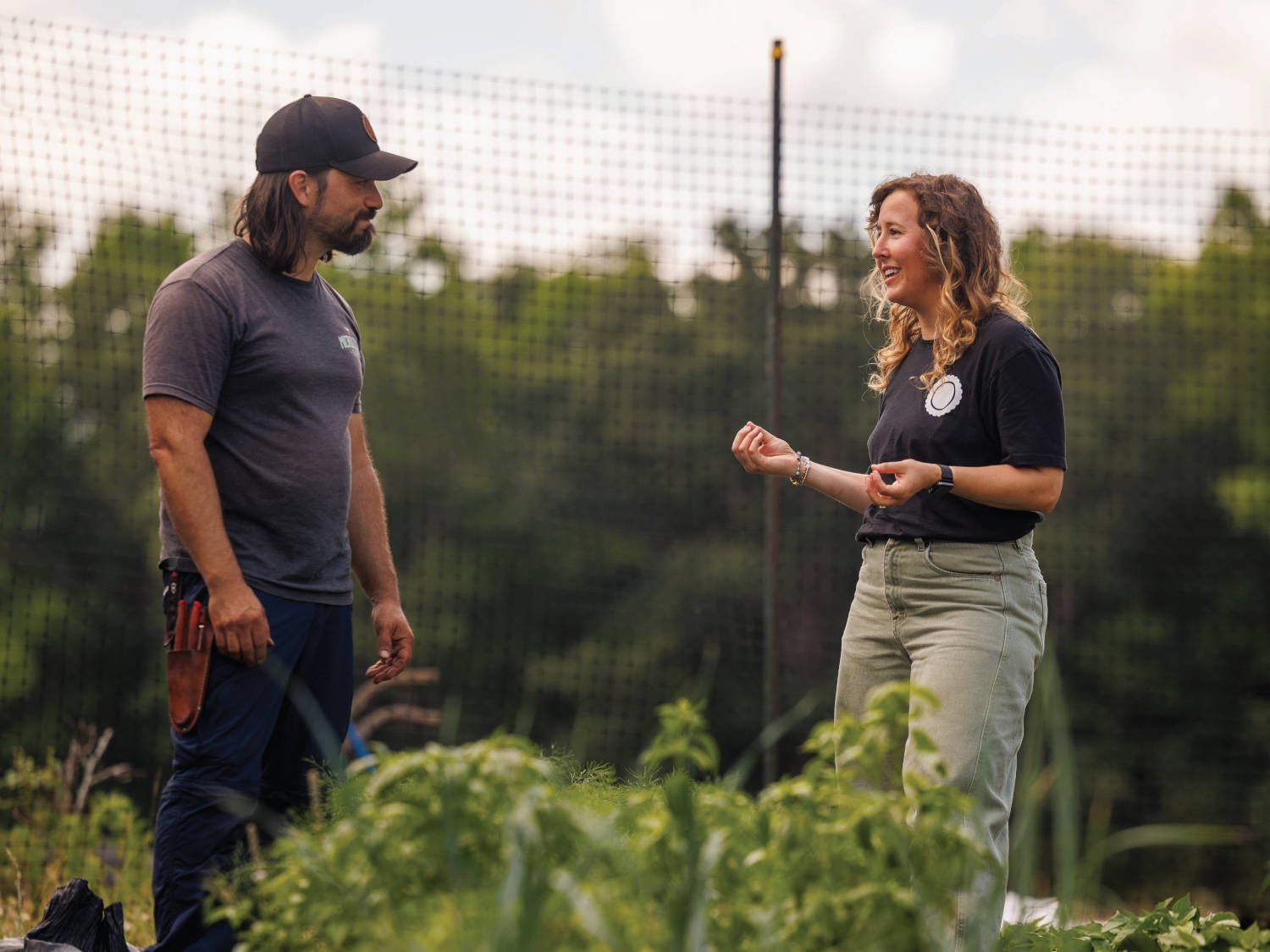
Jordan Heyd meets with one of Lekker Eats’ local farm partners, whose seasonal harvests help shape the restaurant’s ever-evolving menu. For Heyd, sourcing ingredients is about more than freshness. It is about cultivating relationships with the people who nourish the community, one harvest at a time.
You managed your diabetes the entire time despite the increased responsibilities as a chef and the associated stress?
Yes. Diabetes doesn’t go anywhere. It stays with you forever and ever and ever. I just was praying that I didn’t get fired because, looking back, I was not a good chef by any stretch of the imagination. Thank goodness I love food. I knew flavors, but as I look back at some of the food I cooked, I think, “Oh my God, my poor crew, I’m so sorry. If only I could cook for you guys now.” You typically have a lot more experience and work under a lot more chefs.
I was on the boat for about a year and then started feeling really homesick. I was in my dream job. Everything on paper was perfect. I was living in Fiji for three months, and I lived in New Zealand for three months. I saw some of the most rural and beautiful parts of the world. They were filming Survivor on one of the islands in Fiji and our yacht was in the shot. That is how far out we were.
My mom came to visit me, and I took her on a road trip around the South Island. The first thing she did when she got in the car was tell me that my “Grandy” was diagnosed with Alzheimer’s, and the importance of family. She was my everything. Everyone calls me “little Bonnie.” She was my biggest cheerleader, no matter what I did. She was the loudest and proudest. Never questioned what I did and was fully on board for the craziness. It hit hard.
When my mom left, I got back on the boat and all I could think was that I did not want her to forget me. I went to the captain and said, “I have to go home. I can’t be here.” I stayed on the boat for a crossing, and we docked in Palau at seven o’clock at night and I was gone at 4 a.m. the next morning.
I came home to Myrtle Beach in December of 2019. I started bringing the ladies from my yoga studio salads and other things we sell at the market. My sister let me use her kitchen, and I was doing pickups every Sunday out of her garage. More and more people were placing orders, and I thought we might have something here.
It was clear that I did not want work for someone else, I was feeding people and the business started growing. During COVID, I just dreamed up Lekker Eats and by the end of the summer of 2020, I was 28 and decided to stay here. I rented a two-bedroom apartment, and I turned my second bedroom into my dry storage.
One of my close mentors runs a catering company. She allowed me to use her kitchen to do deliveries out of because my sister’s kitchen was not sustainable for the amount of food I was cooking.
How much volume were you cooking?
I was feeding between 20 to 30 families a week. I started at one delivery a week and then I switched to two deliveries a week. At this point I was allowed to use Randi’s kitchen to cook, but I could not leave anything in it. I would get up at 4:30 in the morning. I lived on the third floor of the apartment, and I would load everything into my car, drive to the kitchen, get there by 6:30 and unload everything. I would cook, clean, package the meals, decide the delivery route, load my car up and then go deliver. I eventually went to my dad and said, “I need to find somewhere to leave my things.” The business was growing and I wanted time to grow the business and focus, instead of spending all my time loading and unloading my car.
My dad owns Myrtle Waves Waterpark. We bought a range and oven, and I cooked out of the funnel cake kitchen beside the wave pool, in a closed-down waterpark. I hired a high school senior, Cassidy, to start doing deliveries for me. I would cook, clean, package, and she delivered. She has grown up and is now like my little sister, part of my family and just graduated from Clemson with her degree in engineering.
How did you secure your first brick-and-mortar location?
The waterpark is seasonal and had to reopen, so my dad learned there was a longstanding Japanese restaurant that was closing called Tabaya. It was small and it was greasy. I went to the bank, never expecting I could secure that kind of money in a loan, and signed my life away. I didn’t know what I was doing but by the end of that day it was mine. I quite literally did turnkey. He left everything, all the equipment, because it was still a functioning restaurant. The next day we went in, completely gutted the place and opened May of 2021.
You were in the construction mode for how long?
I was a project manager about two to three months. I am always put in positions of not actually being qualified on paper to do things. But my motto has become “I can fake it till I make it.” I live by it.
And how long were you there?
We were there for two-and-a-half years. We call it Little Lekker Eats. The shop was so small, we only had two tables inside and four tables outside. It was fridges and freezers and is market style. It was a grab-and-go with salads, smoothies, toasts and a very small coffee menu. I ran that shop for two-and-a-half years and held a maximum of two or three employees at a time. I cooked every single day. I opened and I closed.
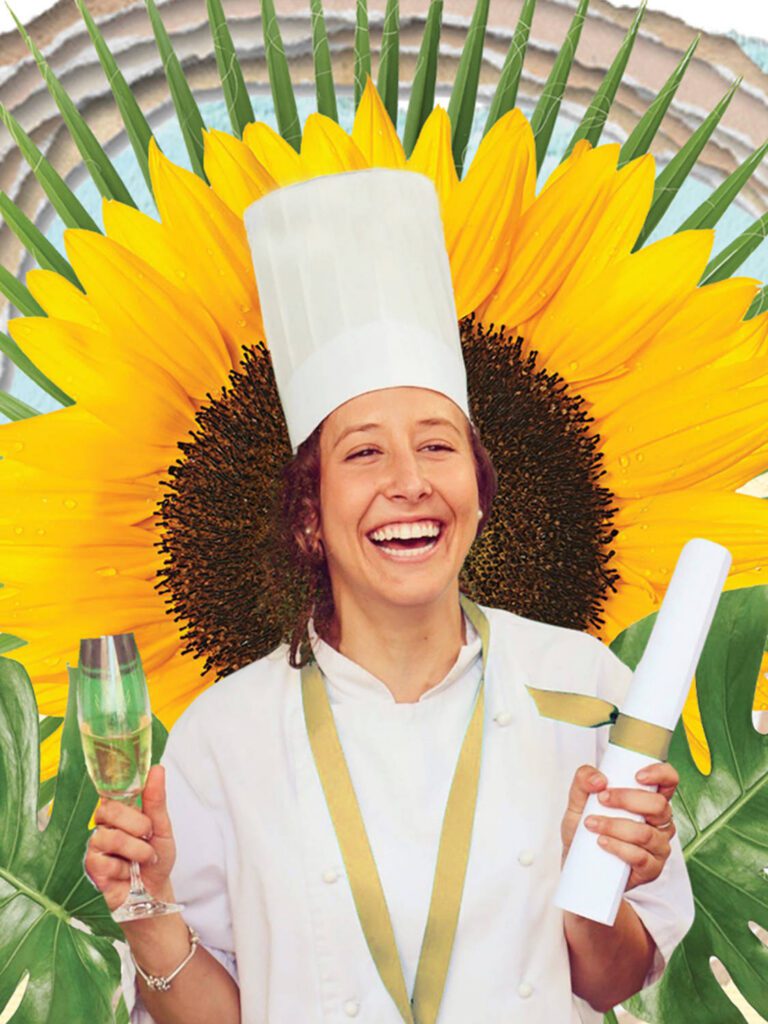
Created by a friend after her culinary school graduation in Cape Town, South Africa, this portrait captures the joyful spirit that has defined Jordan Heyd’s culinary journey. Today, that same sense of optimism, creativity and adventure infuses every meal served at Lekker Eats.
What prompted you to open another restaurant?
People started saying they wanted to sit down and eat our food. They were tired of having to grab from a container and they wanted more options. There’s only so much you can fit into Little Lekker Eats because it is 600 or 700 square feet. It has an open kitchen, so when a customer walks in, you can see me cooking. You have to listen to your clientele because you are serving them. I do everything my way, but I try to appease all those who were supporting my dream and truly want to make them happy as well.
There was a business called Croissant that had been right across the sidewalk and was a place that I went to as a kid growing up. They were open in that location for 15 years. Heidi, a wonderful chef owner, had two Croissants and Hook and Barrel and from a sustainability standpoint, they just needed one Croissant. When they decided to close that location, Heidi let me know that they were closing if I wanted to maybe come take a look. It was well over 2,765 square feet.
I wanted more people to eat my food. I wanted more people to feel the culture of what Lekker Eats was. I think that hospitality is so important, down to how you answer the phone or what you say when someone enters your restaurant or how they feel when they leave.
The brand Lekker Eats I was trying to push was all based on my life experiences. It was based on my travels. Lekker Eats translates in Afrikaans to Yummy Foods. So, it was a way for me to bring all of my travels into one place
In 2023 we opened what is now Lekker Eats Market and Kitchen.
Was the expansion stressful?
Yes. We originally were vegan and gluten-free. Not because I didn’t want to cook meat, but because the kitchen was so small, and I don’t like reheating meat. So going into the big restaurant, we have meat and a lot more to offer menu-wise.
I also had never run a restaurant myself. I was a server in college, but I had never been in the management side of a restaurant. Now, not only am I the chef curating the entire menu, but I was also the construction project manager, running the business, and doing all the hiring and then training. I am shocked that this didn’t swallow me whole.
How many employees do you have?
I have 25 employees, and I manage them all. We are currently looking for a manager because we are at a critical growth point.
How will you scale and do other things?
The goal is to have another location myself and then I would love to franchise. I think that the branding of Lekker Eats makes it franchisable. We make all of our coffee syrups in-house. Our menu is from my recipes, down to our pistachio pesto, salad dressings, and our smoothie bowl bases. We quite literally make everything from scratch, in-house.
Big picture, can you explain what you created?
We focus on working with many local farmers and have a seasonal menu that rotates every three months. We also have staples like our Thai crunch salad, which is our quinoa salad with a sesame garlic dressing chocked full of our chili lime roasted peanuts that we make in-house, with edamame, mango, red bell pepper, carrots, purple cabbage and spring onion. That with a filet of salmon is delicious and is one of our best sellers.
The market is inside our front of house, so when you first walk into the restaurant, you can see our market and all our goodies. We have a host stand and a full-service restaurant. I took Little and put it inside a Big Lekker Eats.
Everything in the grab-and-go is single serving except for our desserts, which you can have for multiple days. We do catering for weddings, birthday parties, and showers. Whatever you want, Lekker Eats is there to feed you.
We do sit-down dinners, buffet-style, other options. We also have a menu for pre-orders as well for families of four to six.
The funniest thing with having such a big kitchen space is that we are able to do so many different things. Our goal was to improve Little Lekker Eats, not wanting to lose it entirely, but wanting to grow it, by having more selections, keeping the market, restaurant, catering, and pre-orders.
The hardest part about growing from Little Lekker Eats to Big Lekker Eats was getting people through the door. Because when you say the food is “clean, healthy, vegan, gluten-free,” those words are the quickest words to make someone from the South go the other way. Thankfully today we are in a really good place, and it has truly caught on.
I want you to give a young woman a piece of advice that you learned you’re your incredible life experiences, that if you had been told could have impacted you.
I think it’s simple: Do not care about the opinions of others. I spent so much of my childhood caring about what people thought about me and always trying to fit into a box. And I failed over and over and over again because I was trying to be who I thought others wanted me to be. When I took the leap of faith in myself and said, “I’m going to do what I want to do and I’m going to follow the things that I like, and I’m going to be unapologetically myself,” that is when I truly found a love for myself.
I think that caring about the opinions of others matters in some instances, but when it comes down to who you are, no one knows who you are better than you do. Listen to yourself and do not care if you are different, weird or funky. You should be proud of it because you are created in the image of God, so be proud of that and who you are.