
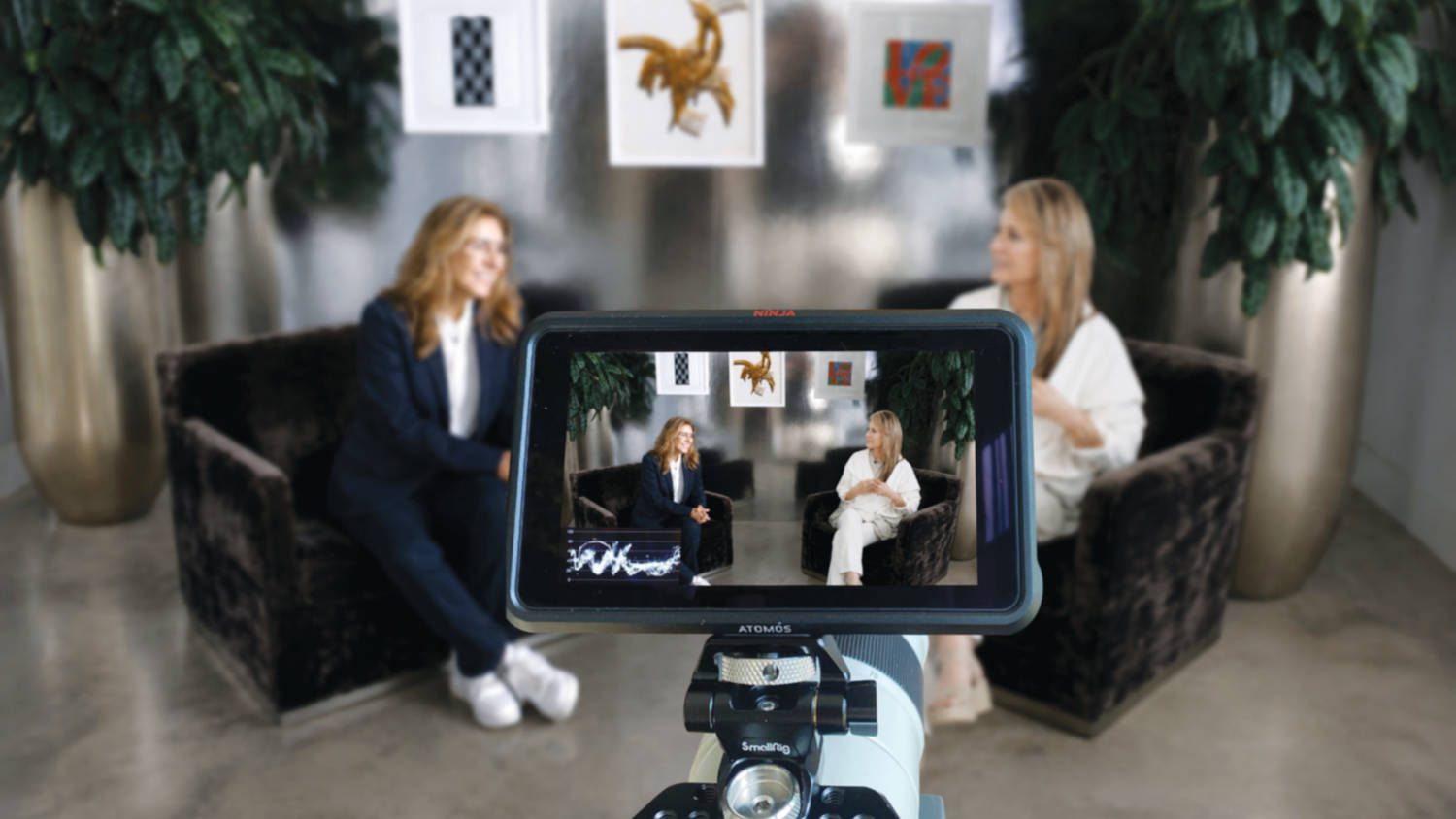
For LORENA GARCIA, food has never been just about what is served on the plate. It is about the stories we inherit, the cultures we preserve and the connections we create around the table. Inspired by the open-door hospitality of her childhood in Venezuela, Garcia has built an extraordinary career by transforming cherished family traditions into a global culinary brand. Today, the acclaimed chef, restaurateur, television personality and author oversees restaurants across the country, has appeared on some of television’s most celebrated cooking competitions and champions causes ranging from childhood nutrition to cancer research. Yet beneath the accolades remains the same woman who fell in love with welcoming people through food. Whether creating a new restaurant, writing a cookbook or mentoring the next generation of chefs, Garcia believes every meal is an opportunity to make someone feel seen, valued and at home.
Where were you born?
I was born in Caracas, Venezuela, a country that I absolutely love. It is in my heart, in my accent, and in my food.
You came to the United States after you completed what degree?
I attended four years of law school in Venezuela. But because the law in Venezuela was not the same as in the United States, I could not transfer my studies to become an attorney here. I had to start all over again, so I decided to switch my studies to paralegal. When I completed my associate degree, I realized that law was not my calling, but the culinary arts were. I changed a law degree for a knife and a cutting board.
Did you miss the linear nature of the law versus the creativity in the culinary space?
No, I really do not. From studying law, I learned critical thinking, which is needed for business. The law has helped me tremendously with the business elements of my profession. But miss being a lawyer or a paralegal, I do not. It was not my calling. Like you mentioned, I am all about creativity and being in the kitchen. I am very physical in that sense. I am grateful that my parents understood that law studies would help me in whatever path I chose. They also supported me when I changed course and focused on what I wanted to do in the future.
I am curious about how much of your day is spent on “the creative” and how much is spent on “the business”?
One hundred percent is creativity because it is the entire business and the essence of the job. A good bit of effort is focused on our R&D, which is where recipes and repertoire are generated, though I also oversee creating new business opportunities. The creative part is a live entity that you have to keep feeding. It requires constant attention because you have to stay current. I cannot make the dishes today that I made 20 years ago. The culinary world is always evolving.
More than just cooking, I enjoy crafting “the experience” for the hospitality space. Ever since I was a child, I have loved entertaining. Growing up, I would invite my friends to the house. When we had group studies, the first thing that I would do was fix a meal. I remember making pasta with different cheeses from recipe books and the notes. I wanted to make people feel comfortable and welcome. Food is the trigger that initiates that, right? I definitely fell in love with the hospitality part of the culinary world, not just cooking.
Where did you attend culinary school?
I went to Johnson & Wales University.
Do you think that your upbringing in Venezuela, as in many Latin countries, where there is such a focus on family and entertaining, was almost hardwired into you?
A thousand percent, yes. My childhood home had an open door for family and friends. On the stove being cooked low and slow, there was always a big pot of my mother’s asado negro or chupe venezolano, which is a delicious chicken soup and with tons of jewels inside. I was raised in such a welcoming home where family and friends would arrive throughout the day. I remember the aroma from my mother’s freshly made bread, her soup or a beautiful meal. It was important for our family, because our home was where everybody would get together.
Do you think that you transferred that experience to your restaurants?
Yes, of course. One hundred percent. When you see the outdoor terrace, it is replicated from my childhood home. The balconies lead to different beautiful walls, all that have art. Music was also a big part of the composition. In my restaurants, I always make sure that we go beyond just taking an order of food, but the hospitality side of the whole experience is super important to me. I take that with me everywhere I go, and of course, in my restaurants as well.
How many locations are your restaurants in currently?
I have over 10 restaurants, but right now I am in three different locations in Atlanta, Dallas and Miami. And of course, Chica in Las Vegas.
Of those places, which is your favorite?
You know, Las Vegas has a special place in my heart, but Miami is my hometown. I have beautiful projects coming up for next year here in Miami that I cannot talk about, but I can give you a little peak into the window.
Las Vegas has always been so amazing to me. The love and the acceptance of my cuisine, of who I am. I bring something very unique when it comes to Latin cuisine. It is a new era, and how I view my culture. Vegas is a melting pot of cultures and there are amazing celebrity chefs all over and off the strip. It is certainly a global culinary hub, growing even more with time. So, I love Vegas.
Let’s pivot to television. You have such a beautiful presence and vibrance, which parlays incredibly well on the screen. Why was television interesting to you?
I had the chance to meet Emeril Lagasse early on and I was in such awe. He had a huge influence on me becoming a chef. It was the Food Network era when Bobby Flay and Emeril Lagasse came onto the world stage. I thought, “Wow, this is what I want to do.” I needed to prepare, though, because I didn’t speak English at the level I do now. I had to improve my language skills, work on my accent and learn how to connect with the camera. It was a lot of work.
How did television start for you and at what age was your first foray in television?
How television started for me is an interesting story. I was working in my very first restaurant with eight tables. I was in my early 30s and right out of culinary school. I had finished my internship in Paris, traveled the world, returned back having worked in different properties and hotels. I decided to ask for a loan and take the money that I saved and open a very small place in the design district, which has always been my area. It was a very small place, breakfast and lunch only. I cooked, was the dishwasher and did everything in the kitchen. I had two of my gorgeous, best guy friends taking orders and making deliveries.
I remember this vividly. I was cooking for Valentine’s Day, and everything in the area was booked. A film crew of four or five came in with cameras. I could tell that they were doing something special. They asked if I had space for dinner. We didn’t make reservations, and of course everything was prefixed. I told them, “Listen, you can sit in my bar.” I only served beer and wine because that was the license I had. I served the food through a little window, because my waiters were taking care of the dining room. We started talking, and it just so happened to be MGM, which was doing a piece on the Hidden Gems in Miami. It was because of that dinner experience they came back the next day, and I was part of their piece. They invited me right there and then.
That was my first television experience. The president of Fox in Argentina saw the short interview that lasted like 15 minutes and reached out to me. He said, “Listen, I saw this interview. I love your look, and the way that you talk. I want to do a cooking show with you.” And that is what we did. They specialized in what I call a “stand and stir” show (step-by-step). So, my TV career started from just a short interview that somebody offered to do after eating my food. Of course, the first show was in Spanish. But I wanted to grow and do it here in the United States in English.
Do you think your success is providence/luck or hard work?
Tons of work and preparation. I always say you have to master what you do. I decided to really dive into educating myself in flavors, palates from traveling the world, new techniques, and finding mentors. On top of hard work is being really consistent in the goals that you set yourself.
But at the end, there is luck. You need to be in the right place at the right time, and if you are not prepared, that luck will not find you, right? A lot of people put so much effort in, but you also must be ready to give your best in the right time at the right place. You must always be looking for that right opportunities and chances. But you also must create those moments, because you never know. I learned throughout my career that you never know who is watching and who is asking, “Who is this woman cooking?”
I will always try to make the experience special for my guests, make them feel a personal connection. As I grew my business, I felt so honored that people would eat my food and pay me for it.
How many hours a day do you work?
My time is not measured by the hours, but by the project, if you will. I give each project my all. I always try to have time with my family, particularly when I have to spend a week away, working really hard. I also try to bring my son with me so we might spend time together when it’s possible. I do not really ever take vacations. In my life everything is combined is together.
Do you think about work constantly?
I do. I do. I do. You know, it is funny because when the summer comes and everything slows down a little, I think, “OK, what’s going on?” I can never completely disconnect. It just doesn’t happen. It is hard because while I am away everything else is moving forward.
It is extremely important that your family and your support system supports this lifestyle. I could not work this hard and then go home and feel any resentment or tension. After coming from three days of hard work and just killing it, their support is what makes it all work. The team makes a village, which in turn makes everything doable.
Is it possible to do what you do without a family structure that supports you?
It would be very difficult without family, friends, or whoever your “village” is, to sustain this lifestyle. I would not be able to do it if I was not sure that my mother-in-law, my mother or my brother were there to support me.
How much travel do you do with the specific purpose to learn?
I am very serious about travel because it is the fountain of my inspiration. I do not have to go to the south of Italy in order to get inspired, either. It might be as simple as going to a delicious farmers market in North Carolina and then combining three days of creativity in my atelier studio right here in Miami.
This atelier is spectacular. Can you describe where it is located and the purpose?
We are located in the Upper East Side of Miami at the doors of the bridge that take you to Miami Beach on the right side. One block to the left is the Miami Design District Midtown. About five minutes from here is the airport. We are centrally located in a spot close to everything.
How did you find this location and what was the inspiration?
My business model involves real estate. Some people like to invest in stocks, but I invest in properties. Over 20 years I have been on the lookout for good opportunities, and this was one of them. This was a house that I completely transformed. Now it is a three-story building, and the kitchen is the heart of the entire space. Imagine a chef table where you can seat about 35 people inside. Outside, I have a bar where you can probably seat another 20. It is a super creative space for podcasts, for content creation, for special dinners, corporate events, you name it.
Tell me about the Top Chef experience. Can you take me through the process?
It begins with an invitation. The producers and creators called and said, “Chef, we have a spot, and we would like to invite you to Top Chef Masters, season four.”
You are interviewed?
Yes, otherwise you cannot get cast. Doing Top Chef Masters was one of the most difficult projects of my life, but it also shaped me into who I am today because it gave me confidence. Through the experience, I learned that I had what it takes to compete at a high level, the pipes to cook, and how people react to my cuisine. You have to think quickly on your feet with 10 cameras on top of every move you make, while you navigate the most incredible kitchen, with the most difficult challenges that you can imagine. The friendships that I built, like with Art Smith . . . I developed friendships that have lasted for years. It was like the trigger for everything that I did on television after that. It was very important.
Was that experience the pinnacle of your career?
It was the pinnacle for sure. Prior to that moment, I was ascending, “Who is Chef Lorena in the culinary space?” But that experience kickstarted everything. It definitely was a huge responsibility, because I wanted to represent my culture in the best possible way. I prepared, trained, and it went really well.
Prior preparation is part of the formula for success. How much did you prepare for the Top Chef experience?
For the Top Chef experience, I trained for a solid four-week period, mostly by putting myself under the clock. The most intense thing in the competition is the clock, because that is what gets you. How can you cook a meal in 30 minutes when the first five is trying to figure out what you will make and gather your ingredients? The last five minutes is plating. You have to prepare a meal in 20 minutes, think on your feet with eight judges seated in front of you, all on national television. I wanted to give the very, very best I had. The training did not mean that I was going to win, but at least it allowed me to put myself in those situations and understand it.
One thing I learned is that Top Chef Masters was less about winning and more about being remembered, by being your authentic and true self, putting your best foot forward and just going for it.
Who is the first person that pops into your mind, a “pure creative,” not the business expert or television personality, but sheer culinary talent?
I look up to Bobby Flay and Nancy Silverton. In my early career, when I was going to culinary school, Julia Child made a huge impression on me because I saw what women in the industry could accomplish. Guy Fieri is a dear friend of mine; I admire what he has built. He has a completely different style of food and culinary arts but shows us you can reach your dream by being yourself and staying true to who you are. I think that is beautiful.
Your authenticity is our gift. Tell me about your America’s Next Great Restaurant experience?
That experience was so incredibly amazing. They look for five judges with unique personalities. I remember sitting at the table with the producer, the head of the studios, my managers and agents and thinking, “I am going to bring Chef Lorena Garcia because I cannot be anybody else but me.” I defended that position through the end. I think that is why I was cast.
You are a chef, restauranter, television personality, businesswoman and also an author. Tell me about publishing your first book.
Penguin Random House approached me about writing a cookbook, and my first thought was, “What do I want to say as an artist?” That became Lorena Garcia’s New Latin Classics. It combined everything I had learned throughout my career as a chef with who I am, the way I was born, the way I grew up, the flavors that connected me to my childhood and the techniques I learned through my travels. I wanted to marry all of that into one book.
Later, Lorena Garcia’s New Taco Classics grew out of bringing the different cultures of Latin America into a handheld format. That’s how we eat throughout much of Latin America, whether in Mexico, Venezuela, Colombia, Argentina or elsewhere. Everybody knows what a taco is, but I wanted to take it beyond that. I wrote every recipe and tested every single one myself. I worked with a beautiful food stylist, Mariana Velásquez, who became a dear friend. I was in awe of how she made my books come to life. I also worked with a co-writer who spent countless hours interviewing me and translating my voice into book form. I’m not a writer. I’m a chef.
One of the advantages for women in the 21st century is their selfactualization. As you reach a certain professional level, many understand the need to mesh their business and personal lives. Women have learned to blend work and family to survive, and they all do it their own authentic way. Have you integrated a small group from your business with your family?
Yes, one hundred percent. Is it completely meshed and exactly how we make it work. Even in my time off, I love to play golf while my son takes golf classes, which is one way we spend together.
I am proud of you for your focus on food security. Tell me about aligning with “No Kid Hungry.”
My mother is a social worker. I remember early in my career having a conversation with her and she said, “In order for you to be successful in life, you must give back.” It is an energy that you must keep coming.
Children have always been very much in the top of mind, and early in my career I represented all the Hispanic brands for Nestlé.
I attended all the Latin festivals in the country from Broadway, LA, Miami, New York to Puerto Rico.
I watched overweight kids being bullied right in front of me. Even though we have progressed since then, the pandemic of obesity in children in our country is like no other. I created Big Chef Little Chef and would go to schools and teach children the importance of cooking, because cooking at home is healthier than fast food. I partnered with school boards and created recipes for the school districts. All over the country, I went to larger school cafeterias and prepared meals from my recipes. The initiative started growing and then I started working with Art Smith in Common Threads, another incredible nonprofit organization.
Four years ago, No Kid Hungry reached out to see if I was interested in being one of their ambassadors. I said yes immediately, because children have always been my cause. The work that they do and what they have achieved is absolutely incredible. Their support of the Latin community is important, and I am grateful for the opportunity to join the effort.
As we speak, we are in the middle of our summer campaign. During the summer break many children are most hungry, because their only meal is often the one they receive at school. No Kid Hungry gears up their awareness campaigns about programs families can access, like receiving $120 per child until they are 18 years old and free meals depending on the city. There are a lot of programs families can access during the summer.
You also focus on how food can manifest as medicine. I am curious as to the reason you picked glioblastoma.
My brother was diagnosed with a glioblastoma multiform grade four, which is the most extreme category, with a life expectancy of six months to a year. My brother has been doing well despite two resections and a brain bleed. He is treated through the University of Miami‘s Sylvester Brain Tumor Institute. My family and I try to help as much as we can for a group that Dr. Ricardo Komatar (his surgeon here in Miami) assembled.
The University of Miami‘s Sylvester Brain Tumor Institute is extremely important for research because this type of cancer does not have any cure. The treatments are experimental and my brother, thank God, has been a success story. I try to spread the word to the world of what we did, how we did it and the team that we had. Hopefully our approach will be useful to other people in need.
We took a holistic approach—spiritual, mental, physical, and nutrition, all of which played a big part in his recovery. We were not so interested in the type of food that he would eat, but made sure the food was homemade and well prepared. Of course, we monitored sugar, salt, and fat intake so it was a comprehensive diet, but at the same time, the food was built around what he liked to eat. At that moment, not knowing how long he was going to live, we encouraged him to eat whatever he wanted. The diet was not a strict one, and he pretty much ate whatever he wanted—within reason, of course.
He loved ice cream on the weekends, something that he looked forward to. We understood the need for a positive attitude because when somebody is happy and optimistic, it reflects in the body. I think treatment may have differing results when someone is miserable and cannot eat or do the things that they want. I also think that our spirituality and emotional health are extremely important. But the most important thing is how positive the person is.
Where do you see yourself in ten years?
I wonder how long I want to continue going a thousand miles an hour, which is where I am right now. In 10 years, my hope is that everything that I have done until now goes to autopilot and I can relax a little bit. Maybe my son will take over the craziness. I would love to slow the intensity down but without detaching myself, because the kitchen is the big love of my life.
What is the award or accolade that you’ve received that gives you the most pride?
A life-changing moment was standing in front of the wall of Culinary Titans in Las Vegas, seeing myself, little Chef Lorena at 5-foot, 6 inches on a 30-foot wall.
How many members do you have on your team? Roughly?
My internal team is comprised of 12 people. But if you count all the restaurants—Vegas, Dallas, Atlanta—I would say between 600 to 800, depending on when.
What are you afraid of, Lorena?
The uncertainty of what will happen next or not having the security that I need for my family. Those two things keep me awake, but at the same time, they are the engine and the force that drives everything. It is that uncomfortableness and that uneasiness that drive me. As the years pass I realize that anxiety keeps me very focused. It is just a way of being.
I want you to give your younger self a piece of advice that perhaps could have helped you or changed your life. What would that be?
Defend who you are to the core and trust that your dreams will happen. You have to trust it. There will come a moment that you are going to think that there is no way out or there is no way that these things can happen. Or the dream is too big, or the dream is not for you. But just trust. Trust that you have it. Trust that yes, you can do it. That belief does not come from people telling you, or what you hear on TV, or Oprah saying it. Trust the feeling that you truly are enough. That is what I would say to my younger self, for sure.