
Some will not look on suffering because it creates responsibility.”
— Fulton J. Sheen,
Influential American theologian, author, and pioneering media broadcaster

The morning after Hurricane Isaias, the dogs and I took the Cottonwood trails. What had been familiar paths the day before were now flooded, trees uprooted, the ground slick and broken. We slipped and slid for a couple of miles until I turned us home. The devastation was quiet and total. No sirens. Just the ordinary business of wind and water rewriting the landscape overnight.
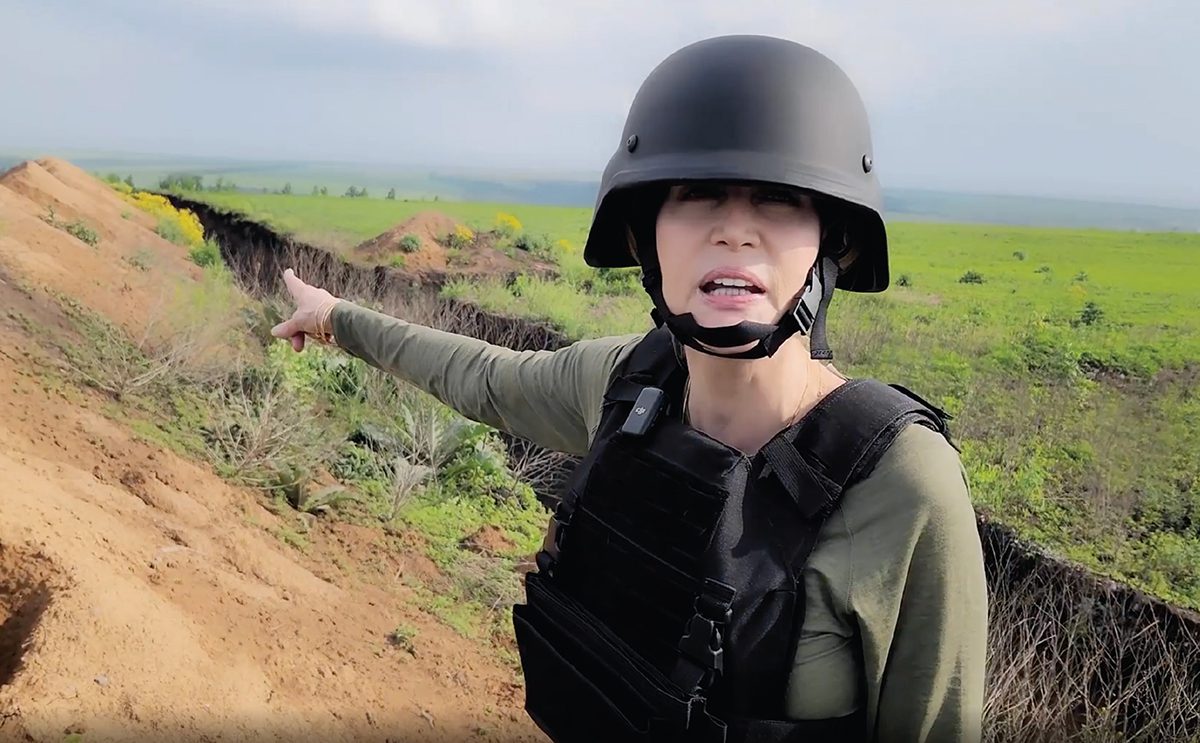
It reminded me of our second foray filming in the war-torn country of Ukraine, in a forest near Izium. Months had passed since the Russian occupation, but the devastation was so immense it was inconceivable. As we wandered a forest reminiscent of this morning’s trails, the trees still held the evidence: IV bags nailed high for soldiers who had been wounded, left behind like markers of a temporary hospital that never had time to become permanent. The same trees downed. The same ground torn open. The same silence afterward. Only the cause was different. One was weather we cannot command. The other was a choice human beings made.
We cannot stop a hurricane. We can cease hurting one another. That distinction should be simple. It is not. As Americans, distance is a kind of mercy until it becomes a kind of blindness, and it is dangerously easy to treat other people’s pain as background noise. Something that happens there. To them.
I love the cooking channel. After a long day of fixing issues and making decisions, of managing people and the continuous battle to balance budgets, the last thing I want is to watch evil happening in the world. Given the choice between that and a mind-numbing hour of Beat Bobby Flay, I admittedly choose the cooking channel. It asks nothing of me. It calms me. And while it does, the faces I met in Ukraine quietly fade.
Fulton Sheen was an American Catholic archbishop and one of the most widely heard voices of his time. In the 1950s his weekly television program, Life Is Worth Living, reached tens of millions of households. He spoke plainly about faith, moral choice, and the ordinary temptations of a comfortable life. The line that opens this letter is characteristically direct: looking costs something. It asks something of us. So many of us prefer not to pay the price. I am no different.
He also said something that goes further: “The refusal to take sides on great moral issues is itself a decision. It is a silent acquiescence to evil.” Once we know, the question changes. Awareness is no longer enough. Knowledge of suffering and of evil creates a second, quieter decision: what we will do with what we now know. To stay neutral, to stay silent, to keep choosing the cooking channel and calling it self-care, is not neutrality. It is a choice. It is a form of agreement with the status quo.
Some will not look on suffering because it creates responsibility. And some, having looked, will still refuse to take sides. Awareness is a refusal to let comfort become amnesia. It is the decision, once we know, not to look away again and to resist the numbness that modern life so generously offers. We live in a small town in a traditional American life, surrounded by the ordinary mercies of safety and routine. That is a gift. It is also a temptation to forget that every doorstep is, in some measure, ours.
One of ELYSIAN’s purposes under the banner of Women Inspiring Women is to film those stories, to shine a light, even simply to acknowledge what is happening. Consciousness is a practice, not a mood. But once you have looked, once the faces are no longer abstract, the harder question arrives: what will you do with what you now know?
I have stood in those forests. I have seen the IV bags still nailed to the trees and walked the ground that was torn open. I know the difference between weather and choice. And I also know how easy it is, afterward, to choose the cooking channel and let the faces fade. That ease is the real temptation. Awareness that does not move is just another form of looking away. So the practice is not simply remembering. It is deciding, again and again, that what I have seen will cost me something—my silence, my comfort, my habit of treating other people’s pain as background noise. It is speaking the names. It is giving when I can and refusing to pretend I cannot when I can. It is the ordinary, repeated choice not to let knowledge become amnesia.
What we do after we know is the practice. May we not wait for tragedy to arrive on our own trails before we remember the forests where others walk.
Thank you for taking the journey.
Much love,
Karen Floyd,
ELYSIAN Publisher & Founder