
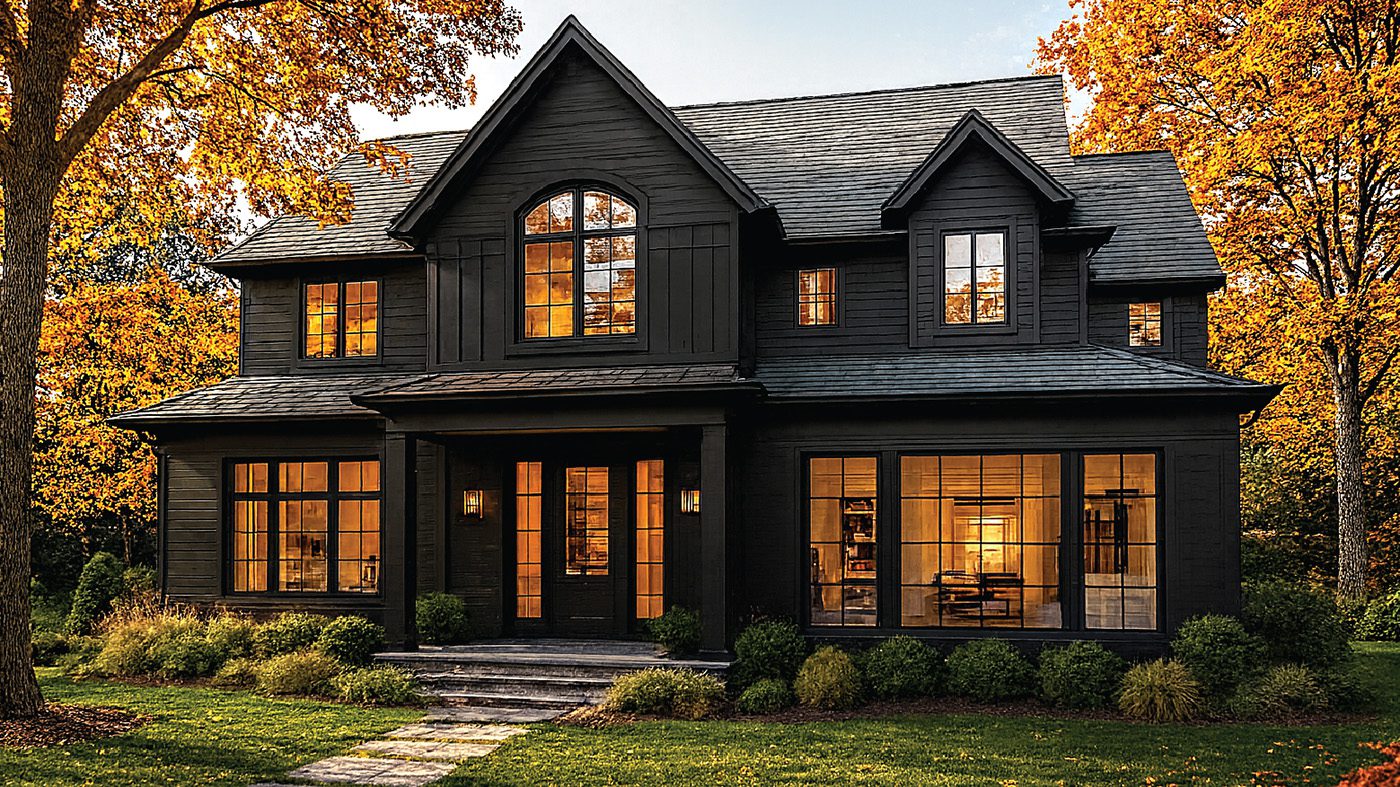
Once a choice for the audacious, black has steadily moved from the fringes of design into the mainstream, redefining what it means to make a statement with a home’s exterior. Today, inky facades are celebrated for their timeless sophistication, dramatic presence, and ability to accentuate architectural form. From matte charcoal to glossy obsidian, black exteriors create a canvas that is both bold and remarkably versatile, harmonizing with natural surroundings while drawing the eye to the home’s structural artistry.
The resurgence of black in residential design is more than a fleeting trend; it is a reflection of evolving aesthetic sensibilities. Homeowners are increasingly embracing minimalism and modernism, seeking exteriors that convey confidence without ostentation. Against a backdrop of greenery, stone, or even soft gravel, a black-painted home asserts a quiet authority, enhancing the interplay of light and shadow across its surfaces. Every angle, overhang, and corner is highlighted in a way that lighter hues rarely achieve, giving even the simplest structures a sculptural quality.
Advances in paint technology have also elevated black to a practical choice for exterior surfaces. Today’s formulations resist fading and weathering, ensuring that deep, rich tones remain consistent despite sun, rain, or wind. Matte finishes offer subtle sophistication, creating a velvety depth that complements wood, metal, and stone accents, while high-gloss coatings reflect light with precision, emphasizing architectural lines. Designers recommend pairing black exteriors with natural textures such as soft timber, limewash walls, or warm stone to create a balanced, inviting facade that feels both modern and grounded.
Black is remarkably adaptable, capable of harmonizing with a range of architectural styles. Traditional homes gain a contemporary twist, with shutters, trims, or gables painted in bold contrast, while modern designs lean into monochrome schemes that accentuate clean lines and geometric forms. Even within urban settings, black exteriors signal refinement and intentionality, standing out amidst lighter-toned neighbors without overwhelming the streetscape. For those designing homes in rural or coastal landscapes, black provides a striking counterpoint to lush greenery, sandy beaches, or rolling hills, blending drama with natural beauty.
Beyond aesthetics, painting a home black can carry emotional resonance. Dark tones evoke a sense of calm, grounding the property within its environment while conveying strength and resilience. In the age of slow living, where outdoor spaces are curated for both relaxation and social connection, black exteriors provide a contemplative backdrop, allowing gardens, terraces, and patios to shine. Homeowners can layer textures, greenery, and lighting to create a sense of depth and intimacy, transforming the exterior into an immersive experience rather than simply a visual impression.
The rise of black as a defining exterior color underscores a broader shift in residential design: homeowners are seeking individuality, confidence, and artistry in every choice. Far from being merely daring, black-painted homes project a sophisticated sensibility, demonstrating that bold color can harmonize with nature, highlight craftsmanship, and elevate a property’s presence. For those willing to embrace its power, black transforms more than a facade—it reshapes how a home is perceived, experienced, and remembered.