
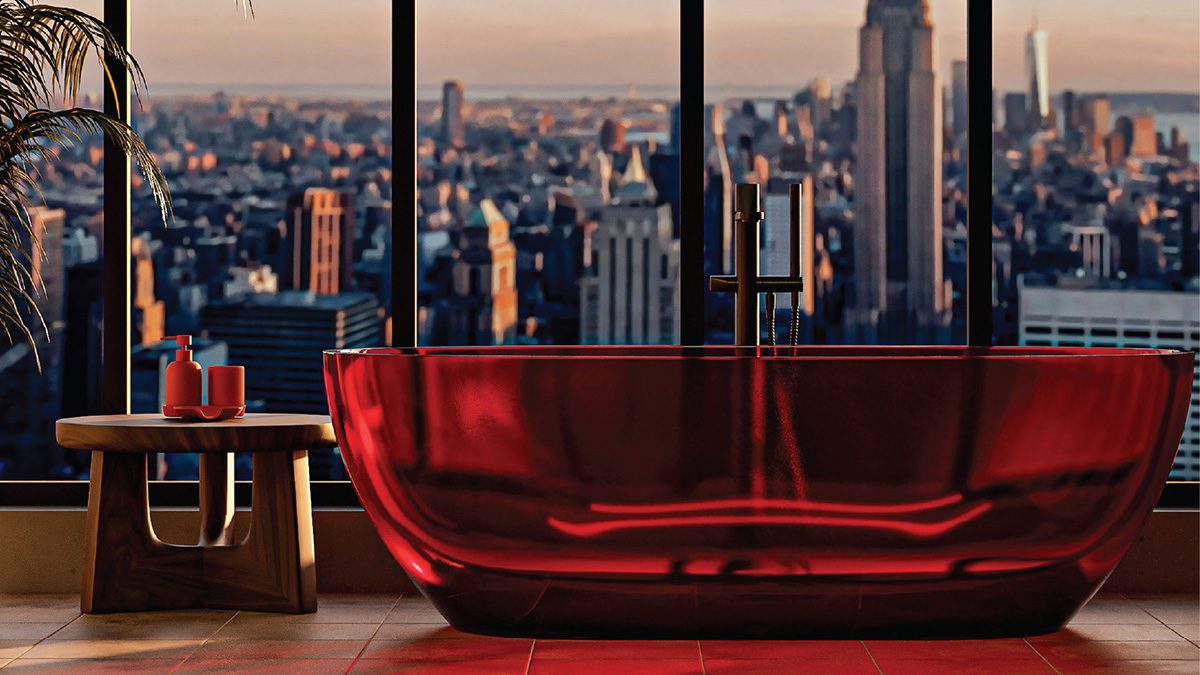
The bath has long been more than a functional necessity—it is a ritual, a space of reflection, and, increasingly, a sanctuary. The story of the bathtub begins in ancient civilizations, where the first known examples were simple, utilitarian basins. Archaeological evidence suggests that the Indus Valley Civilization, around 2600 BCE, boasted private bathing areas in homes, with expertly crafted terracotta tubs and rudimentary drainage systems. These early baths marked the beginning of humanity’s enduring fascination with cleansing not only the body but also the spirit.

Rendering of The Baths of Caracalla, completed in 216 CE
By the time of ancient Rome, bathing had evolved into a grand social affair. Roman bathhouses, or thermae, were architectural marvels, featuring heated floors, expansive pools, and intricate water circulation systems. The Baths of Caracalla, completed in 216 CE, remain among the most magnificent examples, combining artistry, engineering, and opulence on a scale that transformed bathing into a public spectacle. These spaces emphasized the communal aspect of wellness, where citizens of all classes could enjoy the benefits of water, steam, and leisure, merging hygiene with luxury.
During the Middle Ages, however, the prominence of bathing declined in Europe due to shifting attitudes toward public hygiene and religious perspectives on the body. Bathing became a more private, utilitarian act, often limited to small basins or portable tubs in homes. Yet in other regions, such as Japan, the ritual of bathing flourished in the form of onsen and sento, emphasizing mindfulness, relaxation, and the therapeutic qualities of hot water—a philosophy that would resonate in modern luxury design.
The Renaissance and subsequent centuries ushered in renewed attention to personal bathing, particularly among the aristocracy. Cast-iron, copper, and tin tubs lined with tin or enamel became the hallmark of opulent private bathing chambers. These tubs were often freestanding, a design choice that celebrated both the form and function of the vessel itself. By the 18th and 19th centuries, innovations in plumbing allowed indoor bathrooms to flourish in wealthy homes, and the bathtub became a centerpiece of private luxury rather than a communal necessity.
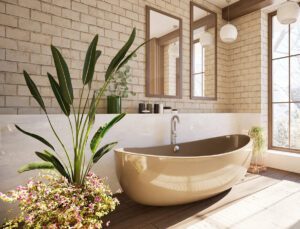
Today, the bathtub has transcended its purely practical origins to become a sculptural element in luxury interiors. Contemporary designers experiment with materials ranging from Italian marble and terrazzo to high-gloss resins and precious metals. Some are integrated with cutting-edge technology, offering features such as chromotherapy, underwater sound systems, and self-cleaning mechanisms. Designers like Kelly Wearstler and Philippe Starck treat the tub as both functional furniture and objet d’art, where curves, textures, and finishes are carefully curated to evoke serenity, elegance, and indulgence. The modern bath is a sanctuary—a space to pause, recharge, and experience the interplay of craftsmanship, artistry, and innovation.
As we look ahead, one can’t help but wonder what the future of the bathtub will hold. Will it continue along the path of modern minimalism, embracing serene lines, quiet luxury, and high-tech functionality? Or might designers draw inspiration from historic and naturalistic forms, celebrating organic shapes, raw materials, and tactile textures? Perhaps the next generation of baths will merge both approaches—a harmonious blend of contemporary elegance and timeless craftsmanship, offering spaces that are simultaneously innovative, intimate, and intimately connected to the human desire for comfort and beauty.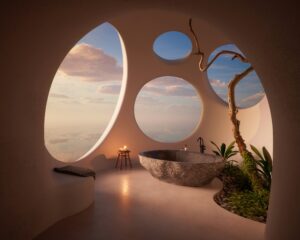
From the terracotta tubs of the Indus Valley to the sculptural, technology-enhanced soaking sanctuaries of today, the evolution of the bathtub mirrors our shifting priorities: from communal necessity to private indulgence, from simple hygiene to holistic wellness, from utilitarian object to luxurious statement. In every era, the bath reflects not only the sophistication of its time but also our timeless desire to create moments of refuge and pleasure within the home.