
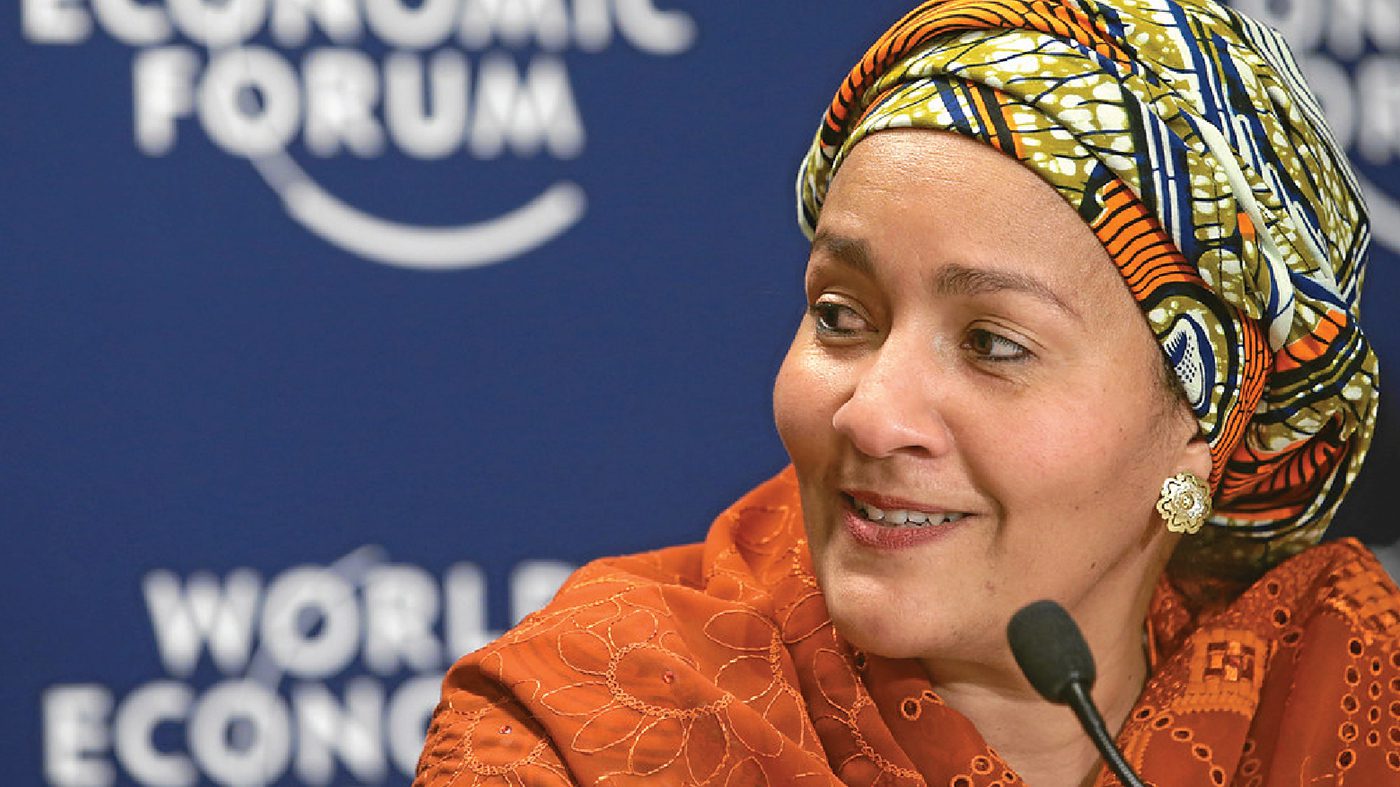
In an era defined by global volatility—from climate disruption to widening inequality—power no longer belongs solely to those who command headlines. It belongs to those who quietly shape systems. Few embody this reality more fully than Amina J. Mohammed, the United Nations’ Deputy Secretary-General and Chair of the UN Sustainable Development Group. With rare institutional reach and intellectual authority, Mohammed stands as the most influential woman shaping the modern United Nations—and, by extension, the global agenda itself.
Appointed Deputy Secretary-General in 2017, Mohammed occupies the UN’s second-highest post, giving her access to every arm of the organization: peace and security, humanitarian response, development, and reform. As Chair of the UN Sustainable Development Group, she coordinates development efforts across more than 40 UN entities, ensuring coherence and accountability in the implementation of the 2030 Agenda for Sustainable Development. The scope of this role is immense. The Sustainable Development Goals (SDGs) touch nearly every dimension of human life—poverty reduction, climate action, gender equality, education, health, and peace. Mohammed is not a spokesperson for these goals; she is one of their chief architects and stewards.
Before joining the UN’s senior leadership, Mohammed served as Nigeria’s Minister of Environment, where she led national efforts on climate policy, environmental protection, and sustainable development. Earlier, she played a pivotal role as Special Adviser to UN Secretary-General Ban Ki-moon, helping to shape the SDGs themselves—arguably the most ambitious multilateral framework ever adopted. This continuity matters. Mohammed does not merely implement policy; she understands its origin, intent, and fragility.
What distinguishes her influence is not performative leadership, but quiet authority. Mohammed is known for operating behind the scenes—building consensus, aligning institutions, and translating vision into execution. She represents real, institutional power, not symbolic influence. Her leadership style reflects deep systems thinking: progress requires coordination, persistence, and the political courage to reform entrenched structures.
This makes her quintessentially aligned with ELYSIAN’s focus on global leadership, sustainability, and peace. Mohammed operates at the intersection of all three. Climate change, in her framework, is not only an environmental issue but a driver of conflict and displacement. Gender equity is not a social add-on, but a prerequisite for sustainable peace. Multilateralism, she argues through action rather than rhetoric, remains humanity’s best tool for collective survival.
Mohammed represents something increasingly rare: competence paired with conscience. She does not dominate the spotlight, yet her decisions ripple across nations. From UN reform to development financing, from climate resilience to fragile-state recovery, her influence shapes how the world responds to its most urgent challenges.
In a global landscape often distracted by spectacle, Amina J. Mohammed is the intellectual and geopolitical center of gravity. Her power lies not in proclamation, but in precision. And as the world races toward 2030, it is her steady hand—working across institutions, cultures, and crises—that continues to quietly shape the future of global cooperation.