
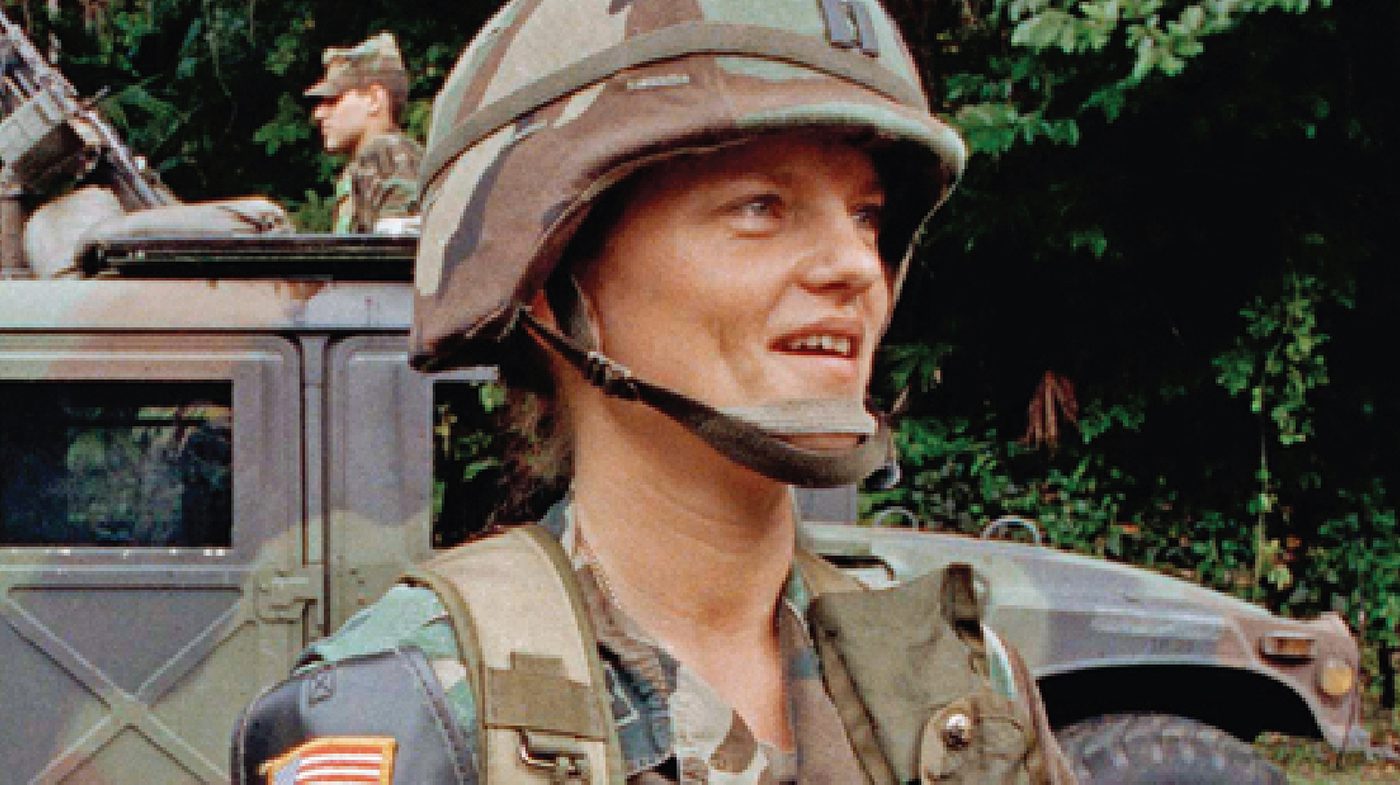
In December 1989, during Operation Just Cause in Panama, Captain Linda Bray quietly but irrevocably changed the history of the U.S. military. As commander of the 988th Military Police Company, Bray led American troops into combat during a firefight at a Panamanian Defense Forces compound near Panama City. With that moment, she became the first woman to be officially recognized as commanding U.S. forces in combat—shattering an institutional barrier that had stood since the nation’s founding.
At the time, women were still formally excluded from combat roles under U.S. military policy. Bray’s command did not emerge from activism or protest; it emerged from necessity. When gunfire erupted and orders were given, she led. The battlefield did not pause for policy debates, and neither did she. Her leadership under fire was later recognized with the Bronze Star Medal, awarded for meritorious service in a combat zone—an acknowledgment that underscored both her performance and the historic significance of her role.
Bray’s story represents female agency in its most extreme and consequential form. She did not set out to become a symbol; she became one by fulfilling her duty with clarity and resolve. Her command challenged deeply ingrained assumptions about who could lead in war and exposed the gap between institutional rules and operational reality. In doing so, she forced the military—and the public—to confront a difficult truth: women were already capable of combat leadership, even when policy refused to fully acknowledge it.
What makes Linda Bray’s legacy especially powerful is how it reframes identity and loyalty. Her authority on that battlefield did not come from gender, ideology, or exception—it came from rank, competence, and trust earned from her troops. She embodied loyalty not as blind allegiance to tradition, but as commitment to mission and responsibility. That distinction matters. Bray did not defy the institution; she revealed its limitations and helped move it forward.
The emotional gravity of her story lies in its timing and its cost. Bray returned from Panama to a military still grappling with how to reconcile her service with existing rules. While her achievement was groundbreaking, recognition was gradual, and the broader policy changes it foreshadowed would take years. Women would not be formally allowed into combat roles until decades later. Yet her command became a precedent—one future leaders could point to when arguing that exclusion was no longer defensible.
For ELYSIAN, Linda Bray is a foundational figure. She anchors the narrative historically, offering depth and continuity to conversations about women, leadership, and progress. Her story connects past barriers to present opportunities, reminding readers that the freedoms and pathways available today were forged by women who stepped forward before permission was fully granted.
Crucially, Bray’s legacy should not be framed as warfare glorification. It is a story about conviction, conscience, and sacrifice—about showing up fully when responsibility calls, regardless of personal risk or institutional inertia. She stands as conviction incarnate: a leader who proved that change does not always arrive with fanfare, but sometimes with steady command under fire.
Linda Bray did not just break a barrier. She made it impossible to rebuild.