
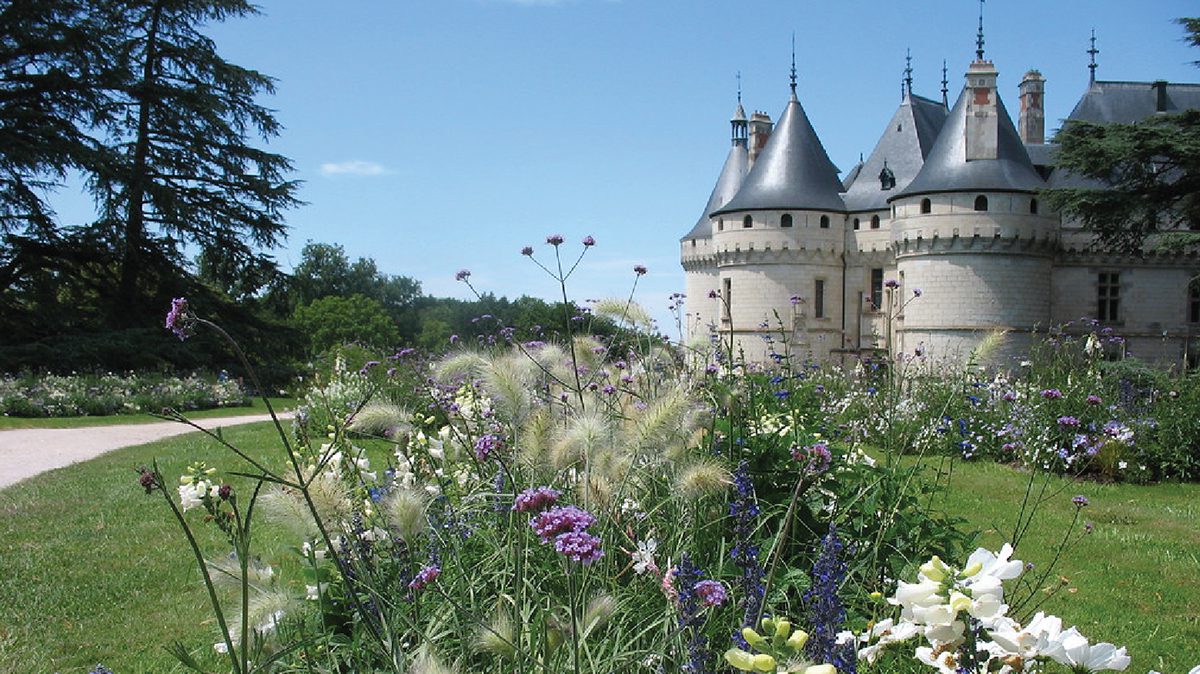
Step through the gates of the Domaine de Chaumont-sur-Loire and enter a world where reality bends: gardens float above the earth like drifting clouds, forests mirror themselves into infinity, and glowing flora responds to your very presence. It feels like a dream—but this is very real, and it is one of the most daring intersections of art, nature, and imagination on the planet.
Perched along the Loire River in France, the Domaine surrounds the historic Château de Chaumont-sur-Loire, a 15th-century castle built in the classic Loire Valley style. Originally a fortified noble residence, it passed through the hands of figures like Catherine de’ Medici and her rival Diane de Poitiers, each leaving their mark on the château’s walls and gardens. The château remained a private home until the 19th century, and today it stands as a historic monument and cultural center, hosting the internationally celebrated garden festival.
While the château preserves centuries of history, its grounds have been transformed into a laboratory for contemporary garden design and art, blending experimental landscape architecture, conceptual installations, and botanical innovation. Here, nature becomes a canvas, and imagination the guiding hand—making Chaumont the undisputed epicenter of avant-garde garden creativity.
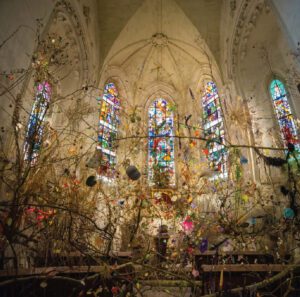
“Falling Garden” by Gerda Steiner and Jörg Lenzlinger
The surreal garden installations come from the International Garden Festival of Chaumont-sur-Loire, launched in 1992. France’s Ministry of Culture sought to reinvent traditional gardens—moving beyond formal French styles into something more conceptual and daring. The festival follows a competition-based model: each year, landscape designers, architects, and artists from around the world submit proposals based on a central theme, ranging from climate change and biodiversity to dreams and digital technology.
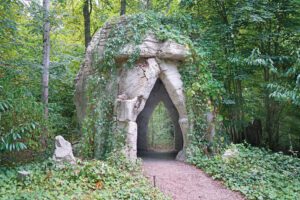
“Folie” by D’Eva Jospin
Selected designs are ephemeral, experimental gardens. They exist for one season—sometimes longer if popular—and allow designers to take risks impossible in permanent landscapes. Materials range from living plants to mirrors, sound, light, and even digital elements. Over time, the festival has become a launchpad for emerging designers, a think tank for ecological and artistic ideas, and a destination for travelers seeking immersive, almost theatrical garden experiences.
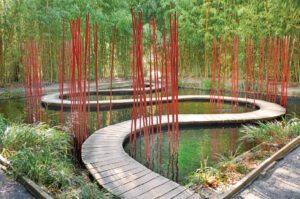
“Carre et Rond” by Yu Kongjian
Recent years have brought some of the most compelling and architecturally significant installations in the festival’s history. Among them is “Folie,” the permanent, concrete, rustic-style installation by D’Eva Jospin, now an enduring landmark within the historical park, where sculptural form and landscape merge into a contemplative architectural ruin reimagined for nature. Alongside it, “Carre et Rond” by Yu Kongjian offers a striking dialogue between geometry and ecology, using landform and water to explore the tension between structured design and living systems. The “Garden of Songs” transforms the landscape into an immersive sensory experience, where sound and environment intertwine to create a poetic, almost orchestral reading of nature itself. And among the most striking recent works is “Falling Garden” by Gerda Steiner and Jörg Lenzlinger, where suspended flora cascades from above like a gravity-defying waterfall of blooms, inviting viewers to move beneath, around, and through the garden itself—a poetic exploration of movement, space, and the ephemeral beauty of spring.
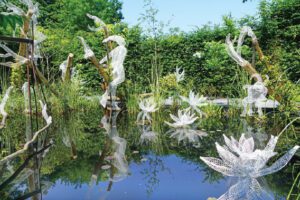
“Garden of Songs” by landscaper Thierry Huau, sculptor Daniela Capaccioli, and the Association “Berceau de Nymphéas”
Chaumont has quietly shaped global garden trends, influencing Chelsea Flower Show-style exhibitions, driving immersive outdoor experiences, and transforming sustainability from mere function into bold aesthetic statement. Here, gardens are not just beautiful—they provoke, enchant, and expand the imagination.
For anyone seeking a glimpse of the garden of tomorrow, Domaine de Chaumont-sur-Loire offers an invitation: to see nature not as it is, but as it could be, through the lens of creativity, audacity, and wonder.