
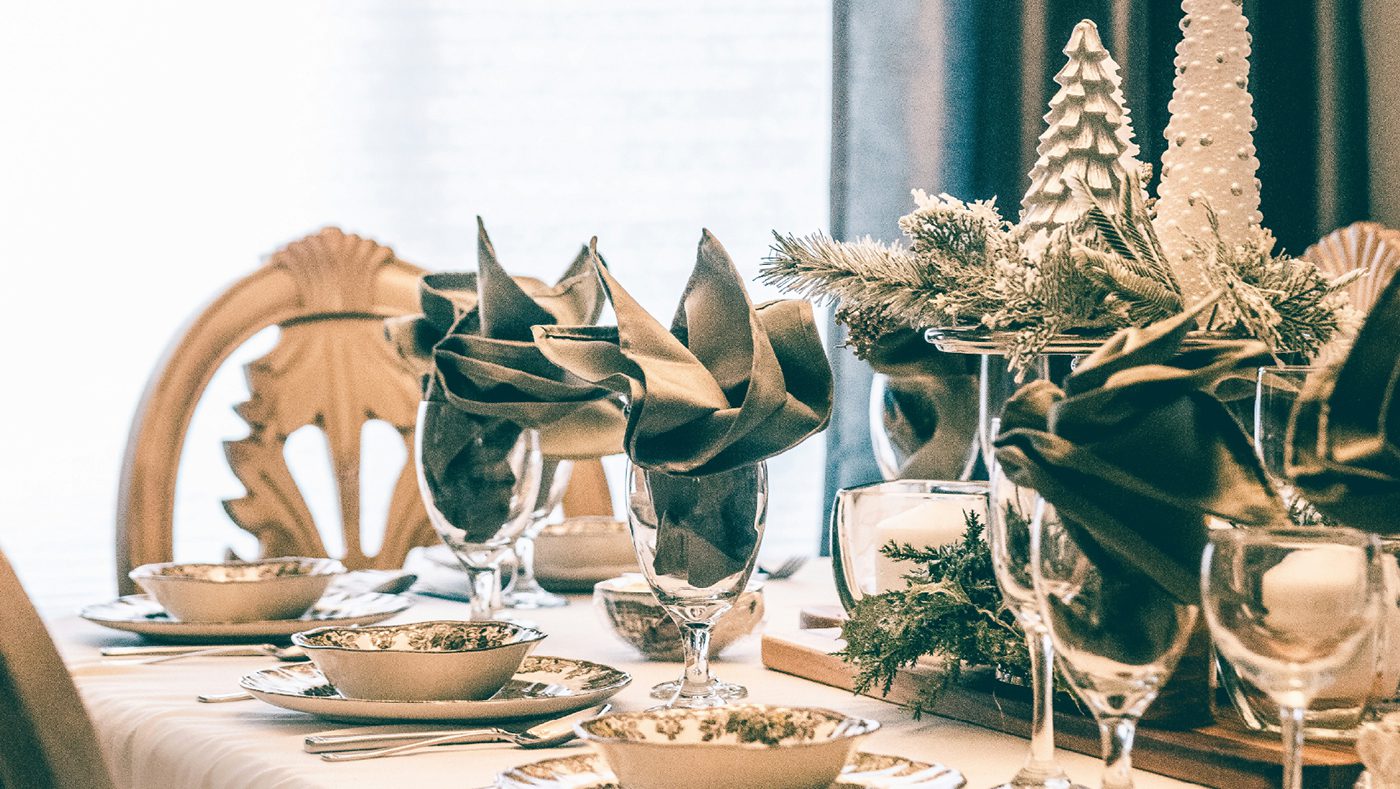
The Christmas table is never just about setting places—it is about setting a mood. Long before the first course is served, a thoughtfully curated table communicates care, warmth, and intention. It tells guests they are not simply invited, but welcomed. In a season defined by noise and excess, the most memorable Christmas tables are those that feel personal, layered, and quietly beautiful.
Begin with restraint. True elegance starts with editing. Rather than chasing trends or over-decorating, choose a palette that feels timeless—soft ivories, winter greens, burnished golds, or deep linen neutrals. Allow negative space to breathe. A table that feels calm invites conversation; one that is cluttered competes for attention.
Textiles are the foundation of intimacy. A linen tablecloth with subtle texture, a hand-hemmed runner, or even beautifully pressed napkins in a natural fabric immediately soften the table. Slight imperfections—gentle creases, organic weaves—signal ease and authenticity. These details whisper hospitality rather than announce formality.
Layer your place settings with intention. Start with classic dinnerware—preferably something with history or character—then add depth through thoughtful accents. A bread plate with a contrasting glaze, vintage silver, or crystal glasses with a delicate stem elevate the experience without overwhelming it. Consider placing a handwritten place card or a sprig of rosemary at each setting; small gestures make guests feel seen.
Centerpieces should draw people together, not divide them. Skip towering arrangements in favor of low, flowing compositions. Winter greenery, foraged branches, single-stem flowers in small vessels, or clusters of candles create warmth without obstructing sightlines. Candlelight, in particular, has a transformative power—its glow softens faces, slows time, and encourages presence.
Personalization is what turns a beautiful table into a meaningful one. Incorporate elements that reflect your story or your guests: inherited serving pieces, family china, or bowls filled with seasonal fruits that recall childhood holidays. A menu card printed simply on textured paper adds elegance while grounding the meal in ritual.
Scent and sound matter more than many hosts realize. The gentle aroma of pine, citrus, or freshly baked bread can evoke comfort without overwhelming the senses. Keep music subtle—something instrumental or softly familiar—so conversation remains the focus.
Most importantly, remember that a Christmas table is not a performance; it is an offering. When guests feel the care behind each choice, they relax. They linger longer. They speak more openly. Beauty becomes a bridge—one that connects people to each other and to the moment they are sharing.
In the end, the most unforgettable tables are not the most elaborate, but the most heartfelt. A well-curated Christmas table does more than impress—it gathers, grounds, and gently reminds everyone seated there of what the season is truly about: gratitude, connection, and the quiet joy of being together.