
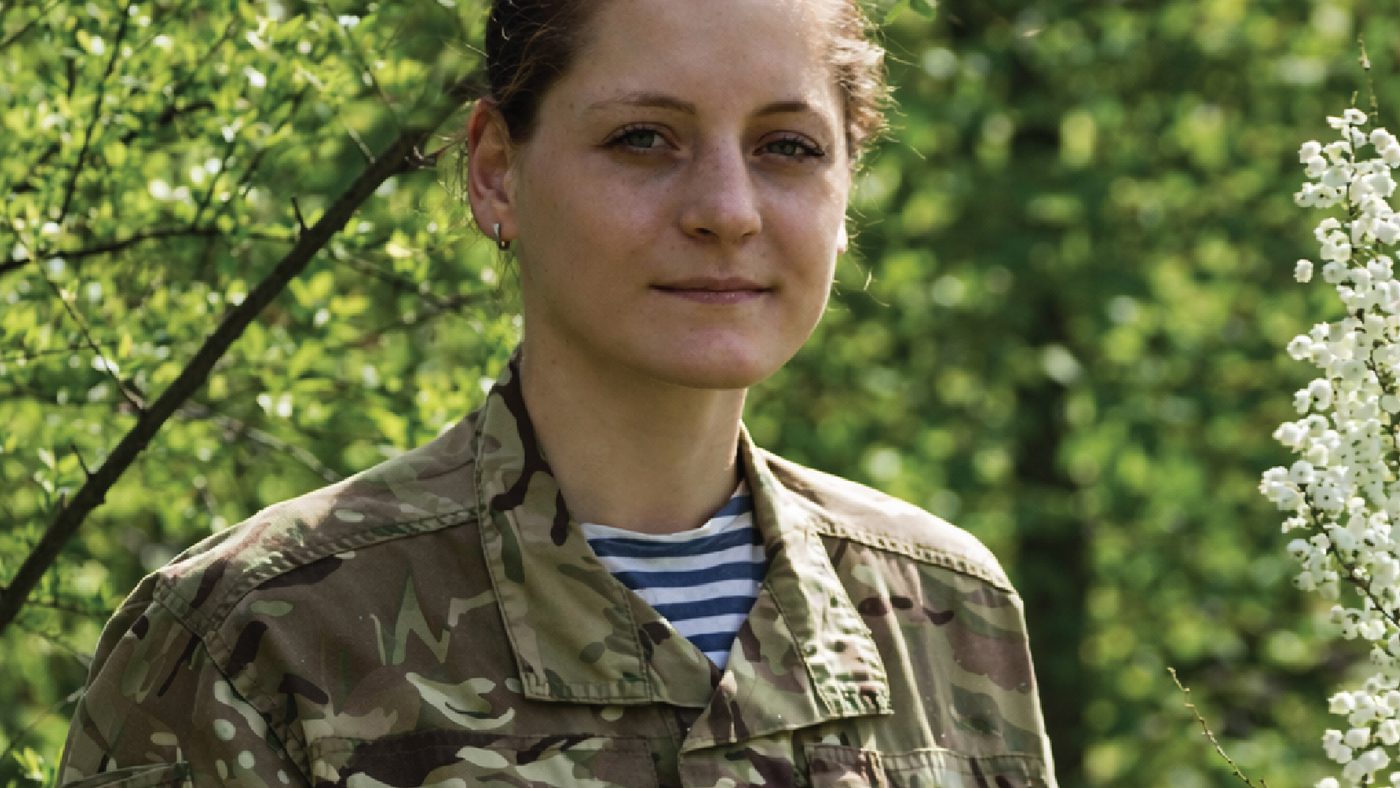
Yulia Tolopa, known by her call sign “Valkyrie,” is one of the most arresting figures to emerge from the war in Ukraine—not because she sought notoriety, but because she chose conscience over birthplace. Russian-born, Tolopa made the rare and perilous decision to fight for Ukraine, aligning herself with a nation under siege rather than the country of her origin. In a conflict defined by geopolitics and power blocs, her story is intensely human: a woman acting on moral clarity when neutrality was no longer possible.
Tolopa’s courage is not performative. It is deliberate, informed, and deeply personal. At a time when many flee war zones, she stepped toward one. Her decision to volunteer for Ukraine’s defense was a repudiation of the idea that identity is fixed by geography alone. Instead, she asserted a more radical proposition—that identity can be forged by values, and that loyalty can be chosen.
This is where Tolopa’s story carries particular weight. She represents female agency in its most extreme form, not in abstract theory but in lived reality. War has long been narrated through male experience, with women cast as victims, mourners, or symbols. Tolopa disrupts that narrative entirely. She is not a metaphor; she is a participant. Her presence on the front lines challenges assumptions about who holds moral authority in times of conflict and who is permitted to act on it.
Her call sign, “Valkyrie,” evokes mythic female figures who decide the fate of warriors, yet Tolopa’s story is grounded in modern consequence. By fighting for Ukraine, she knowingly accepted extraordinary risk—not only from combat, but from the implications of being a Russian-born soldier opposing Russia. Reports have documented that she was captured by Russian forces and later released in a prisoner exchange, underscoring the real and lasting cost of her choice. This was not symbolic defiance; it was a commitment that carried physical, psychological, and existential stakes.
What makes Tolopa’s story resonate—particularly within ELYSIAN’s ongoing focus on Ukraine, peace, and women’s roles in conflict prevention—is its emotional gravity and urgency. She does not speak the language of policy or diplomacy. Her argument is her life. In choosing Ukraine, she positioned herself against violence initiated in her name, asserting that moral responsibility does not dissolve at national borders.
Importantly, Tolopa’s story should not be framed as a glorification of warfare. It is, instead, a meditation on identity, conscience, and sacrifice. She stands as conviction incarnate—a woman who acted when inaction felt like complicity. Her courage lies not only in bearing arms, but in bearing the weight of a decision that severed her from safety, simplicity, and the comfort of inherited allegiance.
In a world increasingly fractured by ideology and fear, Yulia Tolopa reminds us that peace is not only negotiated in conference rooms. Sometimes, it is defended—imperfectly, painfully—by individuals willing to stake everything on the belief that justice is worth choosing, even when the cost is unimaginably high.