
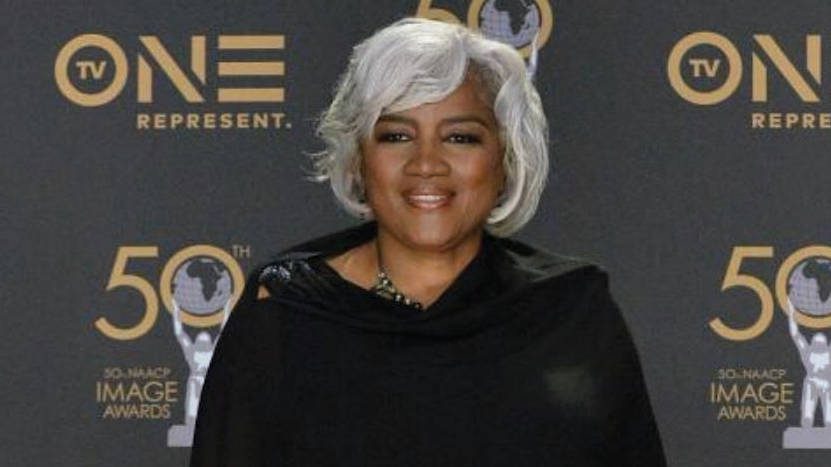
There are moments in public life when noise overtakes nuance—when speed eclipses reflection, and the conversation feels more reactive than considered. It is in those moments that certain voices carry a different kind of weight. Not louder, but steadier. Not performative, but practiced. Donna Brazile has spent a lifetime becoming one of those voices.
Her career has unfolded across the highest levels of American politics, yet it has always retained a sense of grounding—an understanding that leadership is not defined solely by proximity to power, but by how that power is interpreted, challenged, and ultimately used. Over decades, she has moved seamlessly between strategist, advisor, commentator, and teacher, bringing with her a perspective shaped as much by experience as by conviction.
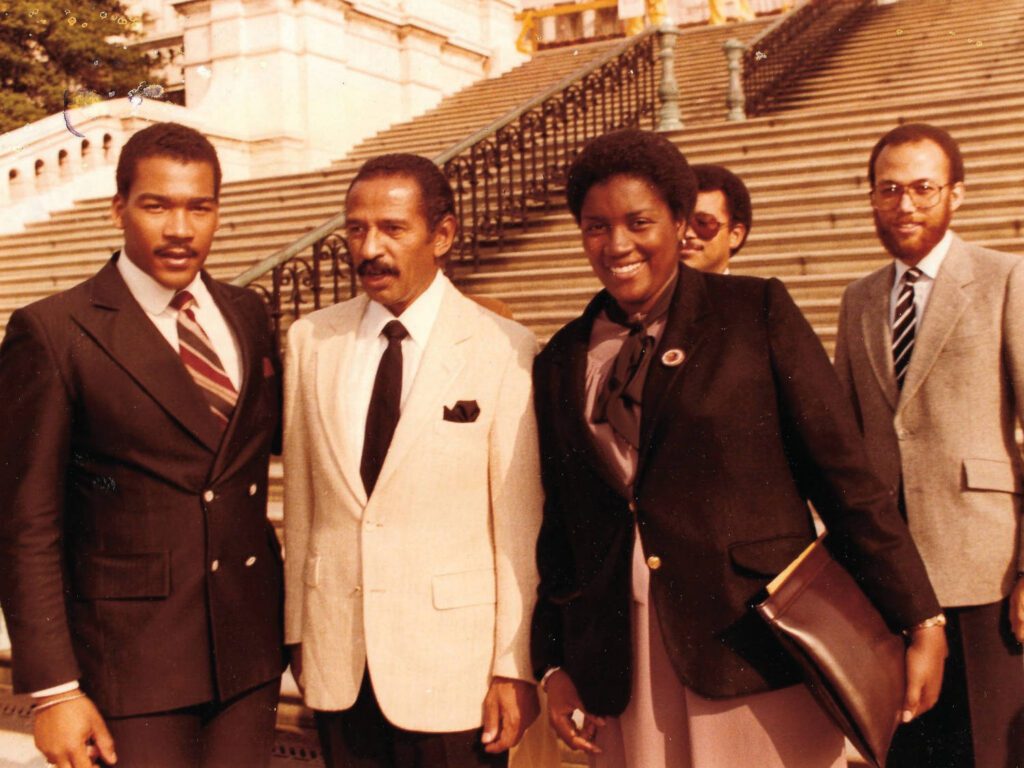
Donna with members of Congress while she was a lobbyist for the USAA.
What emerges is not simply a résumé of firsts or milestones, but a body of work rooted in belief: that democracy, however imperfect, remains a living system—one that demands engagement, care, and a willingness to see beyond the moment.
There are political strategists, there are television commentators, and then there is Donna Brazile, a figure who has spent nearly half a century at the center of American civic life while never losing the urgency, wit, and grounded humanity that first pulled her into politics as a child in New Orleans. Across campaigns, classrooms, television studios, boardrooms, and moments of national fracture, Brazile has remained what she has always been: a believer in democracy as both inheritance and obligation.
Her story has become part of modern American political history. Brazile became the first Black woman to manage a major party presidential campaign when she led Al Gore’s 2000 campaign, a milestone that secured her place as a trailblazer long before “representation” became a standard talking point in public life. But reducing her legacy to firsts would miss the deeper truth. Brazile’s significance lies not only in the barriers she broke, but in the systems she kept pushing to widen, strengthen, and democratize for those who would come after her.
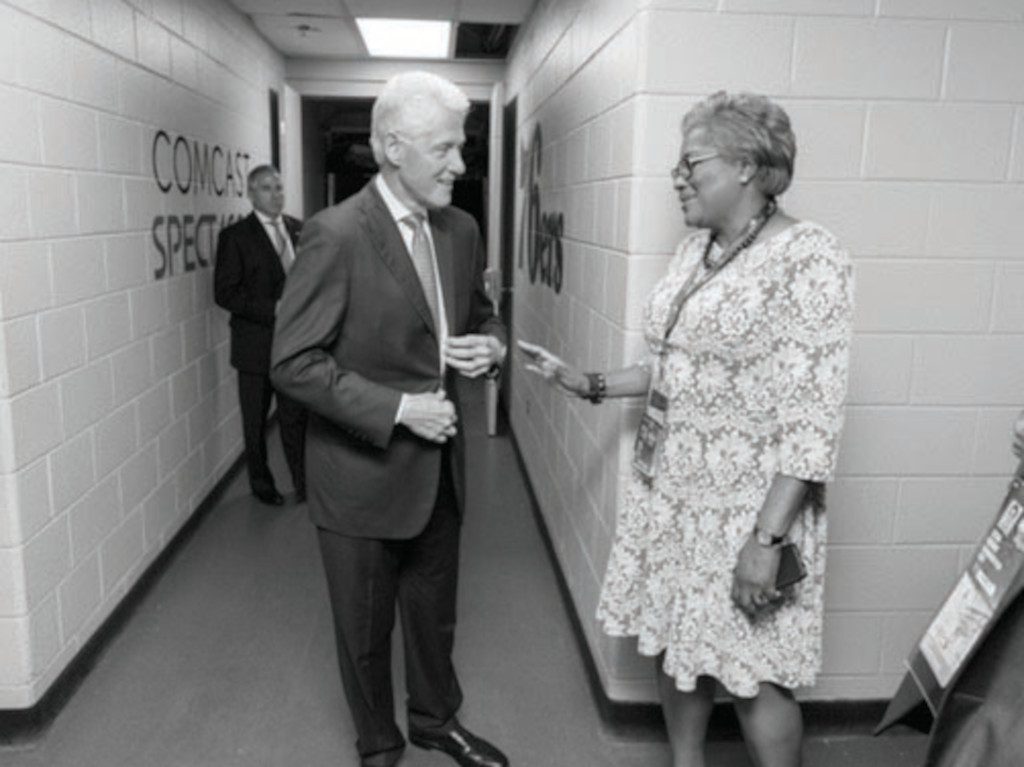
Donna Brazile with 42nd president of the United States from 1993 to 2001, Bll Clinton.
Born and raised in New Orleans, Brazile often traces her political awakening to an early and deeply local experience: as a child, she helped support a candidate for city council who promised to build a playground in her neighborhood. The candidate won. The swings arrived. And a lifelong understanding clicked into place, that politics, at its best, is not abstract theater but a tool for tangible change. That lesson has echoed through every stage of her career, from presidential politics to voting rights advocacy to her enduring work encouraging younger generations to participate in public life.
Over the decades, Brazile built her résumé the old-fashioned way: through relentless work, field organizing, strategic discipline, and a hard-earned understanding of how campaigns are won and lost. Georgetown’s Institute of Politics notes that she worked on every presidential campaign from 1976 through 2000, an extraordinary stretch of engagement that gave her a granular understanding of American political culture across regions, constituencies, and eras. She did not arrive at influence as a pundit first. She arrived there as an operator, someone who understood turnout, persuasion, coalition management, internal tension, and the emotional temperature of a race.
That experience helps explain why Brazile has remained so compelling as a public voice. She speaks politics fluently because she has lived it from the inside. Her commentary has never had the antiseptic feel of distant analysis. Whether on ABC News, in print, or on stage, she brings the sensibility of someone who knows the machinery and still insists that values matter. Her official biography describes her as an Emmy- and Peabody- award-winning media contributor, and the distinction fits: she is not simply media-savvy, but unusually adept at translating the emotional and structural stakes of public life for a broad audience.
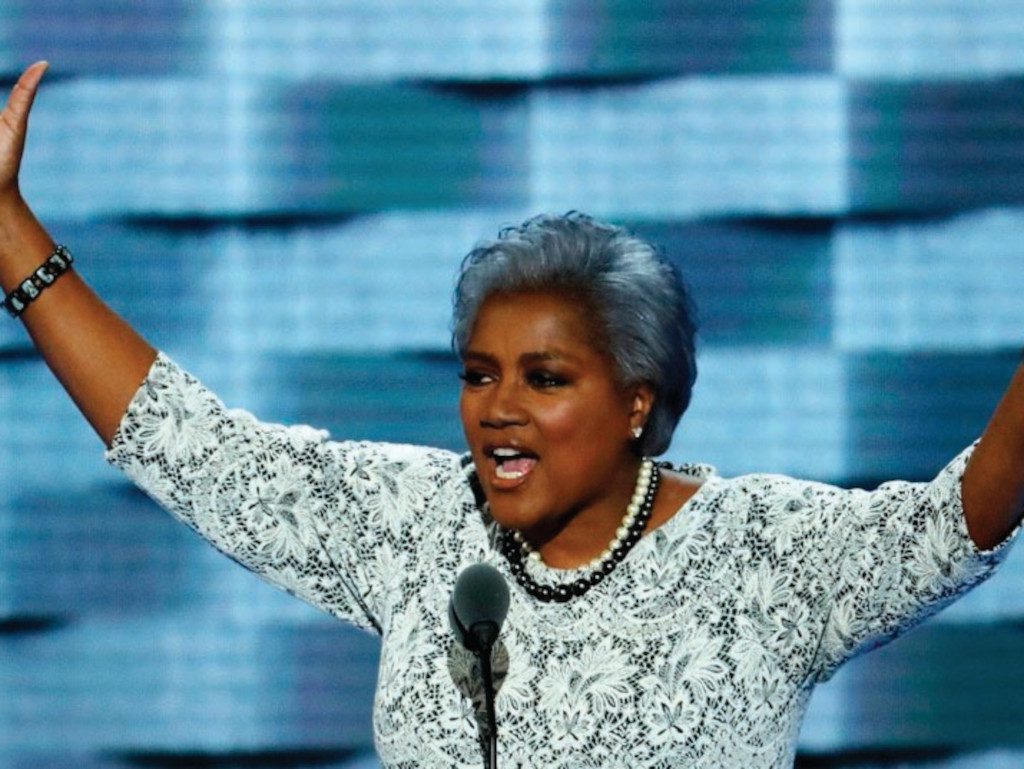
Donna speaking at the 2016 National Democratic Convention after being named interim Chair of the Democratic National Committee.
Yet one of the most striking things about Brazile is how fully she has refused to be contained by a single lane. She is a strategist, yes, but also a teacher. She serves as an adjunct professor in Georgetown University’s Women and Gender Studies Department and has lectured at nearly 250 colleges and universities on democracy, diversity, leadership, and civic participation. In an age when public trust has frayed and political discourse often rewards spectacle over substance, her commitment to students and civic education feels less like an accessory to her career than one of its most important chapters. She has spent years not just interpreting politics, but equipping others to enter it with seriousness and purpose.
Her institutional leadership is just as notable. Brazile has served as interim chair of the Democratic National Committee and previously chaired the DNC’s Voting Rights Institute. She is also a current member of the DNC Rules and Bylaws Committee. Outside partisan structures, she serves as Chair of the J. William Fulbright Foreign Scholarship Board, a role that places her within a global conversation about education, exchange, leadership, and democratic values. She has also served on boards including the National Democratic Institute, the Congressional Black Caucus Foundation, and the Joint Center for Political and Economic Studies. Taken together, those roles reveal a career not only of visibility, but of stewardship. Brazile has repeatedly chosen roles that demand stewardship and accountability, not just analysis.
She is also a prolific author, and her writing reveals the depth of experience and perspective behind her enduring influence. Cooking with Grease: Stirring the Pots in American Politics helped establish her as a memoirist with both candor and humor. Hacks: The Inside Story of the Break-Ins and Breakdowns That Put Donald Trump in the White House pulled readers into one of the most turbulent political chapters in recent memory. She later co-authored For Colored Girls Who Have Considered Politics, which won the 2019 NAACP Image Award for Outstanding Literary Work, Nonfiction, and contributed to 400 Souls and Wake Up America. Across these works, Brazile has consistently done more than recount events. She has documented political life from the vantage point of a Black woman who has spent decades inside rooms where power is brokered, withheld, tested, and reimagined.
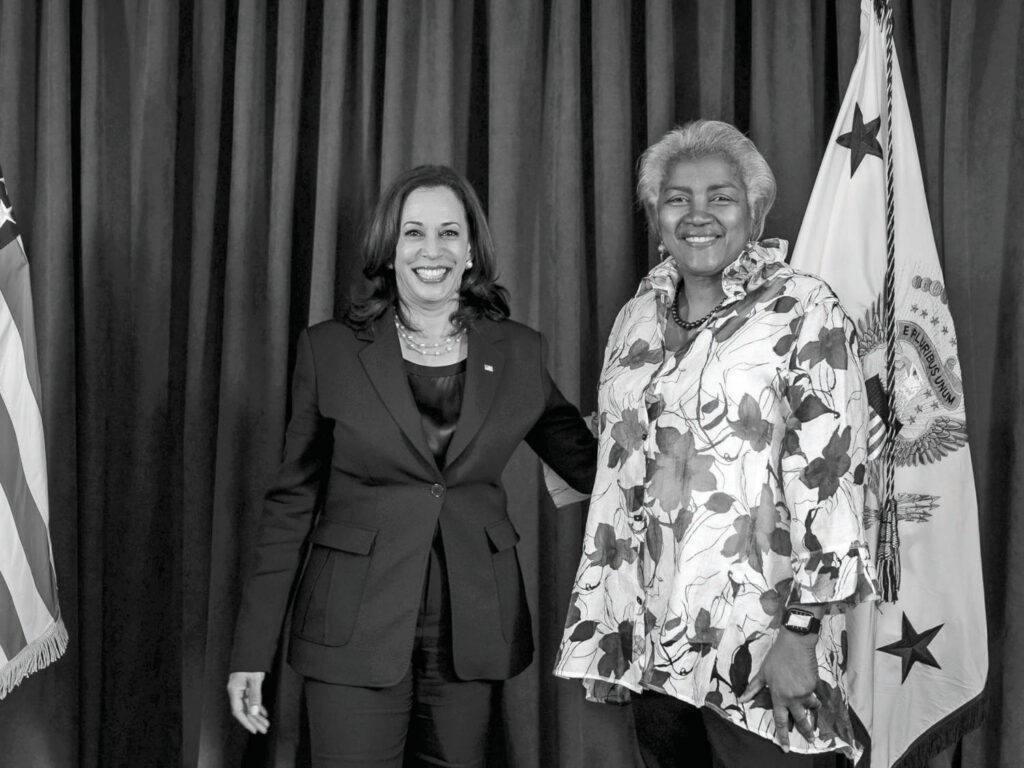
Donna Brazile with former Vice President Kamala Harris.
For all her authority, Brazile has never presented herself as polished into abstraction. That may be part of why she remains so resonant. Her public persona has always carried a kind of democratic warmth: sharp, unsentimental, fiercely informed, but unmistakably human. She can move comfortably between constitutional stakes and personal anecdote, between structural critique and a perfectly timed laugh. That same versatility has carried into unexpected corners of popular culture, where Brazile has made cameo appearances on series like The Good Wife, House of Cards, and Being Mary Jane, as well as in film. With someone else, that might read like trivia. In Brazile, it underscores something truer: she understands performance, but never mistakes it for substance.
What makes Donna Brazile especially right for a moment like this one is that she has spent years insisting on two ideas that America too often tries to separate: that democracy is fragile, and that it is still worth fighting for. Her work around voting rights, civic participation, and coalition-building has always carried that dual awareness. She does not romanticize politics. She knows too much for that. But neither has she surrendered to cynicism. Instead, she has built a life around engagement, around the stubborn conviction that institutions can be improved, voices expanded, and public life reclaimed through participation, vigilance, and courage.
That may be the clearest way to understand her legacy. Donna Brazile is not simply a veteran of American politics. She is one of its most enduring civic interpreters, someone who has spent decades telling the country, in one form or another, to show up, do the work, and believe that democracy belongs to all of us. In a fractured age, that message does not feel old. It feels urgent.