
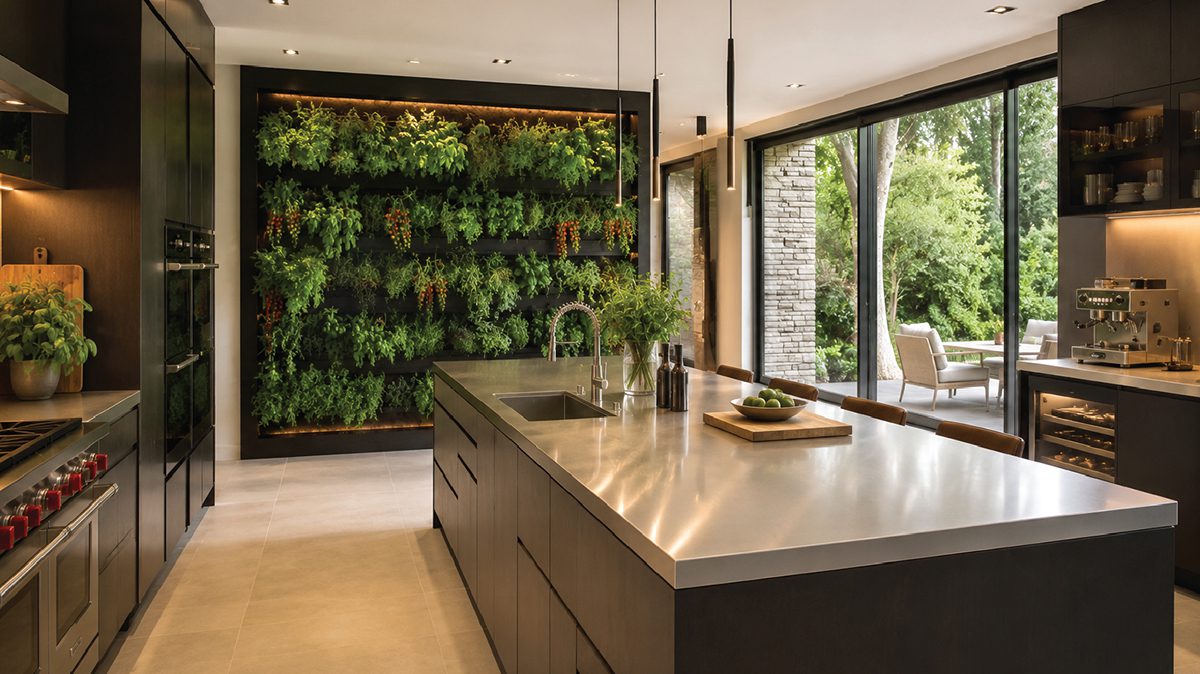
For generations, the kitchen has been the heart of the home. Today, in some of the world’s most thoughtfully designed residences, it is becoming something even more remarkable: a living ecosystem. Rising behind marble islands and custom cabinetry, a new form of edible architecture is transforming culinary spaces into productive works of art. These are not decorative green walls. They are fully functioning vertical gardens that cultivate herbs, leafy greens, edible flowers, and even select vegetables in real time—bringing the farm directly into the home.
At the intersection of horticulture, technology, and design, hydroponic growing systems are redefining what it means to live well. Instead of soil, plants are nourished through precisely calibrated water and nutrient delivery systems that maximize growth while minimizing waste. The result is a cleaner, more efficient way to cultivate fresh ingredients year-round, regardless of climate or season.
One of the most compelling examples is ZipGrow’s Farm Wall, a vertical hydroponic system that transforms nearly any wall into a productive growing environment. Designed to be mounted indoors or outdoors, the Farm Wall uses patented vertical growing towers that circulate water and nutrients through a compact, space-saving design. The system can support an impressive variety of herbs, leafy greens, and fruiting crops while occupying only a fraction of the footprint required by a traditional garden. According to the company, the system uses significantly less water than conventional growing methods while producing abundant harvests throughout the year.
What makes these edible walls particularly appealing is their seamless integration into architecture. Designers are increasingly incorporating them into kitchens, sculleries, breakfast rooms, and entertaining spaces, transforming previously static surfaces into dynamic living features. Imagine a wall of basil, thyme, rosemary, mint, and microgreens stretching from floor to ceiling, illuminated by discreet grow lighting and framed with the same meticulous craftsmanship found throughout the home. The effect is both sculptural and practical.
Beyond aesthetics, the appeal lies in immediate access to exceptionally fresh ingredients. A handful of fragrant basil can be harvested moments before topping a handmade pizza. Delicate edible flowers can be clipped for a salad or cocktail garnish. Fresh parsley, cilantro, and chives become available on demand, eliminating the need for frequent grocery runs and reducing food waste.
Technology plays a crucial role in making these systems remarkably effortless. Modern hydroponic walls utilize recirculating irrigation systems, automated nutrient delivery, and supplemental LED lighting to maintain optimal growing conditions. The Farm Wall’s modular design also allows homeowners to customize the scale of their installation, whether they desire a modest herb garden or a larger vertical harvest capable of supplying a substantial portion of the household’s greens.
The movement reflects a broader shift toward intentional living. As homeowners seek greater transparency regarding food sources and sustainability, edible walls offer a sophisticated answer. They reduce food miles, minimize packaging waste, and make fresh produce available at the precise moment it is needed.
In an era where innovation often feels disconnected from nature, edible kitchen walls offer a compelling alternative. They are living, productive, and deeply connected to everyday rituals. More than a design trend, they represent a future in which architecture nourishes not only the eye, but also the table itself—one harvest at a time.