
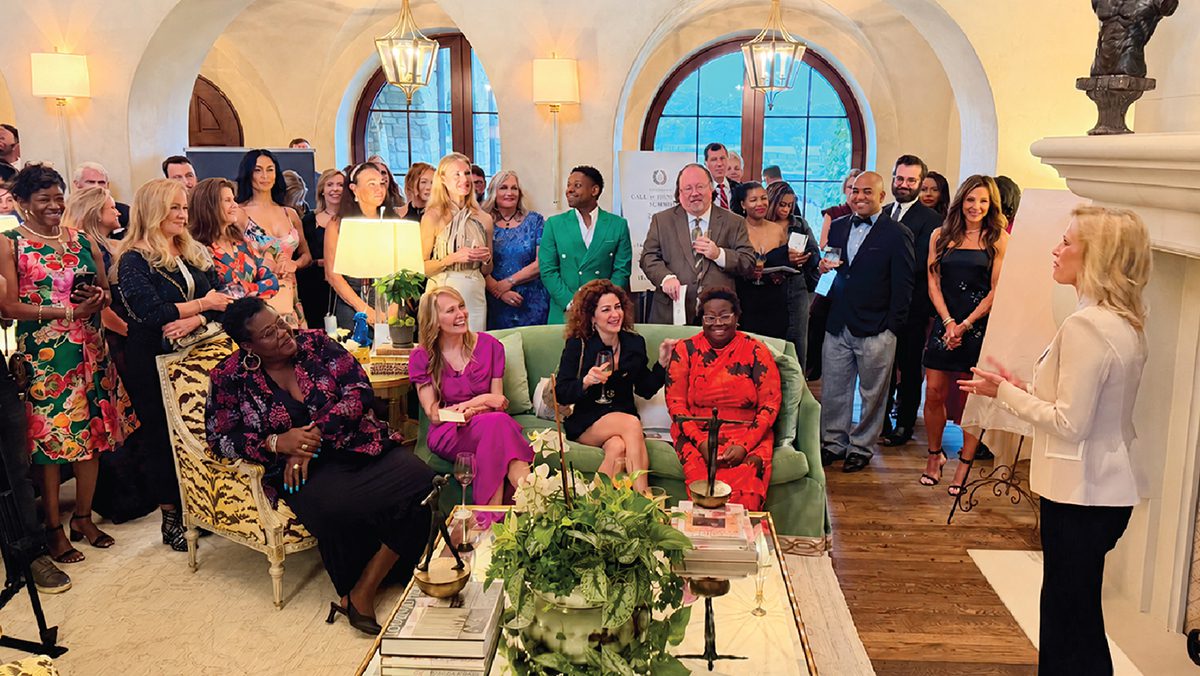
From across the country, elected women, thought leaders, and visionaries came together for a greater purpose, with 23 states represented at the inaugural Red & Blue: Call for Humanity summit. This geographic diversity was not incidental—it was foundational to the intent of the gathering, ensuring that the voices shaping peace, justice, and democratic life reflected the full breadth of the United States rather than a single region, ideology, or political echo chamber.
When leaders from 23 states converge in one space, the result is far more than representation—it becomes a working model of cross-partisan collaboration. Differences in geography often mirror differences in lived experience, policy priorities, and cultural context. Bringing these perspectives into dialogue creates the conditions for deeper understanding, where disagreement is not suppressed but channeled into constructive problem-solving. In this way, the summit functioned as a microcosm of what national unity can look like when rooted in respect rather than uniformity.
This kind of intentional gathering broadens community impact in measurable ways. Leaders do not return home unchanged; they carry with them not only new ideas, but also new relationships and frameworks for cooperation. The conversations held in Spartanburg, South Carolina, ripple outward as participants carry shared language and strategies back to their states and into national and international arenas, influencing local initiatives, civic programming, and public discourse across multiple levels of governance and community engagement. What begins as a single convening has the potential to inform dozens of communities, multiplying its impact far beyond the event itself.
Equally important, a geographically diverse summit helps establish universal goals that transcend ideology. While policy debates may differ from state to state, core human priorities—dignity, safety, opportunity, and mutual respect—remain consistent. When leaders from varied political and cultural backgrounds identify these shared values together, they create a stronger foundation for civic progress. These universal goals become anchors in an increasingly fragmented public landscape, offering points of alignment even amid disagreement.
Bringing a diverse and widespread group of state leaders into the Call for Humanity summit is vital for several additional reasons. First, it breaks partisan silos by preventing peacebuilding from being framed as a political identity issue. Instead of reinforcing ideological boundaries, it creates space where elected officials and civic leaders can prioritize shared values over party affiliation. Second, it generates national ripples of change, as participants return to their home states equipped with actionable insights that can be adapted to local needs.
Third, it empowers diverse perspectives that strengthen decision-making. Peace and justice are most durable when they are shaped by a wide range of voices, including those from rural, urban, coastal, and inland communities. Each brings distinct challenges and solutions, ensuring that no single worldview dominates the conversation. Such gatherings focus on conflict prevention by addressing polarization before it escalates into deeper institutional or cultural breakdowns. Dialogue becomes a proactive tool rather than a reactive measure.
Initiatives that prioritize engagement over division demonstrate how collaboration can reshape the cultural narrative. When leaders from 23 states choose to sit at the same table, they model a form of civic participation that is both ambitious and necessary—one that recognizes that America’s strength lies not in uniformity, but in its ability to find common purpose across difference.