
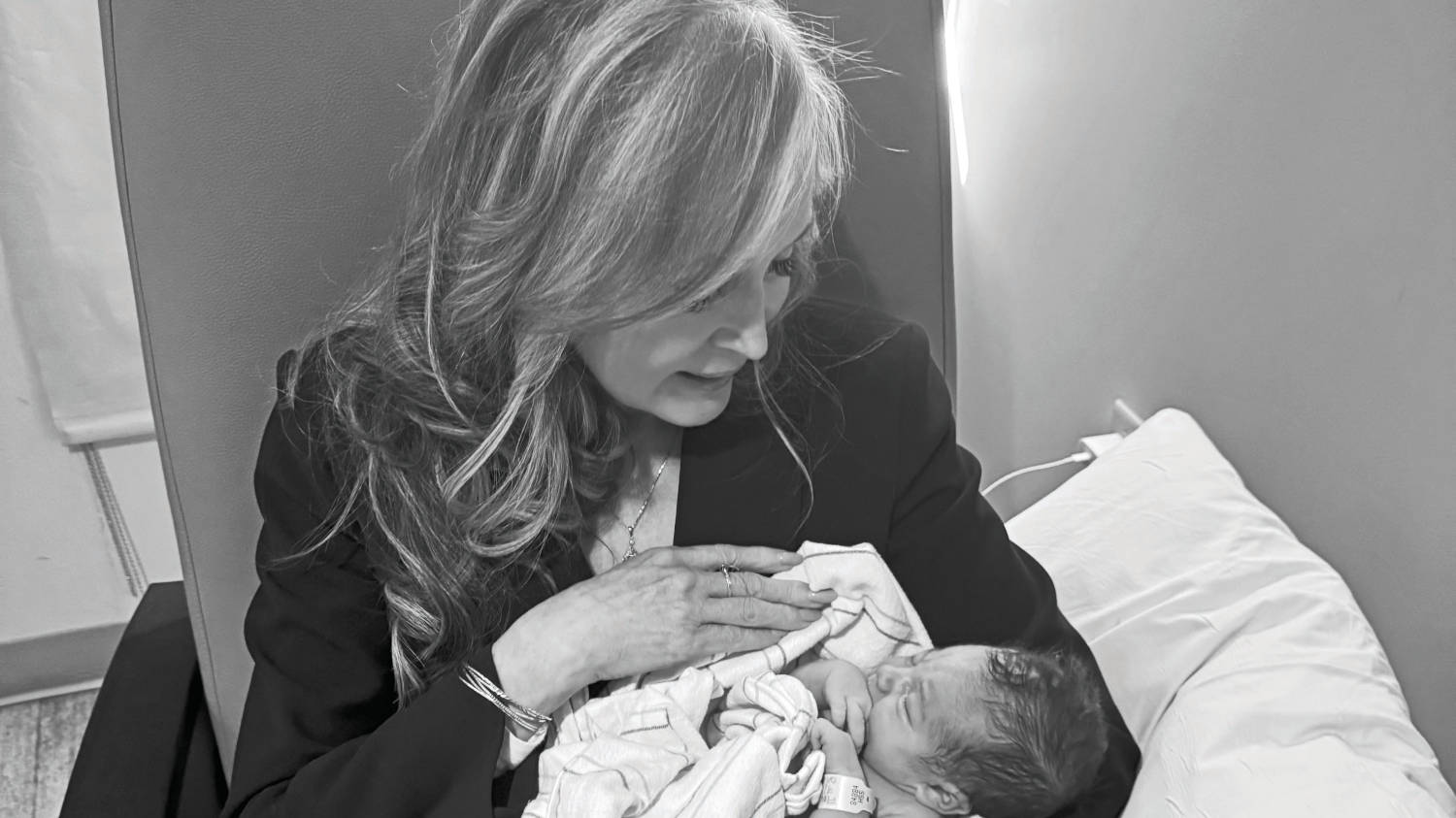
“IN THE WHISPER OF A SINGLE DAY, BIRTH AND DEATH DANCE TOGETHER, REMINDING US THAT OUR FRAGILE LIVES CALL US TO UNITY RATHER THAN DIVISION.”
—KAREN FLOYD
On March 13th, at 7:20 in the morning, my grandson took his first breath.
At 7:48 p.m. that same evening, my dear friend’s seventeen-year-old son took his last.
One day. Twelve hours and twenty-eight minutes apart. Joy and sorrow arriving on the same tide, as if the universe itself wanted to etch the lesson in the clearest possible ink: life is fragile, and its timing is not ours to command.
I sat with both realities that night, cradling the news of new life on the one hand and the unimaginable weight of sudden loss in the other, and the contrast refused to let me sleep. How random it all felt. How utterly outside our control. Birth. Death. The thousand unseen forces that shape a single day. We plan, we prepare, we armor ourselves with opinions and positions, yet none of it can stop the moment when the scales tip.
And that is precisely why the division we humans so eagerly seek feels, in that light, almost obscene.
Why do we spend our precious, unpredictable hours digging trenches between us? Why do we entrench ourselves in opposing camps—political, cultural, ideological—when the ground beneath every one of us is so unmistakably shifting? Outside our windows (and sometimes inside our own homes) there is illness, accident, heartbreak, and evil that does not ask for our permission. It simply arrives. It takes the young. It spares the young. It chooses without regard for party, creed, or carefully curated worldview.
In the face of that randomness, why not choose connection instead? Why not reach across the very differences that once seemed insurmountable and say, “We are both here for such a short time. Let us make the time matter?”
ELYSIAN has always been a place where women’s stories reveal the quiet power of that choice. Over more than a decade we have listened to voices that refused to be siloed or silenced. Women who survived war, who forgave the unforgivable, who rebuilt after loss, who chose hope even when hope felt irrational. Their courage did not come from agreement; it came from the recognition that we are all fragile vessels sailing the same unpredictable sea.
My grandson’s first cry and my friend’s son’s final silence have become, for me, a single resounding question: If life and death can share a day so easily, can we not share this one fragile life with a little more grace?
I am not suggesting we abandon conviction or pretend differences do not exist. I am simply asking that we hold those convictions with open hands rather than clenched fists. That we remember the randomness. That we refuse to waste what little time we are given on dividing when bridges—however imperfect—might carry us farther together.
To the readers who have walked this journey with us through every season: thank you for continuing to choose curiosity over contempt, story over slogan, and humanity over hardening.
To the women who have championed Red and Blue: A Call for Humanity, Lara Trump and Donna Brazile, thank you for your courage in leadership. And to the women who participated in the inaugural summit, in a world that often rewards discord, your willingness to come together for purpose greater than oneself is inspiring.
May the coming months find us all a little less entrenched and a little more entwined—holding space for both the births and the losses that arrive without warning, and choosing, in the hours between, to lift one another instead of tearing one another down.
Much love,
Karen Floyd
Publisher