
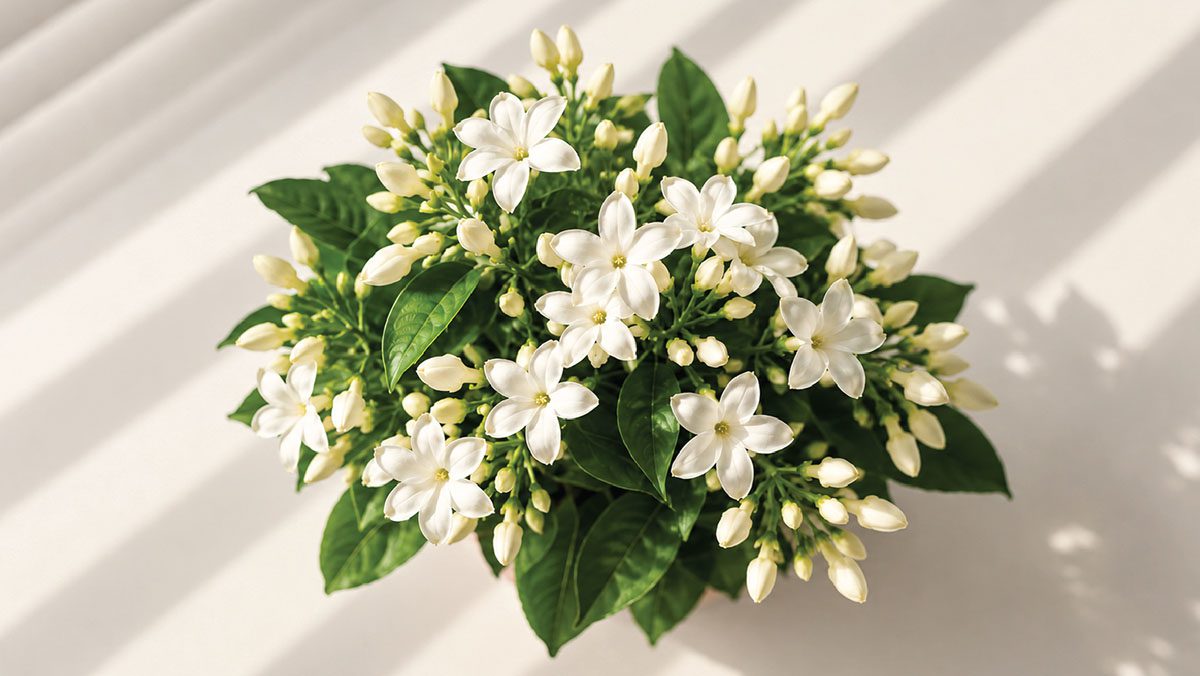
Forget candles, diffusers and artificial fragrances. Some of the most intoxicating scents for the home can come from something far more beautiful: a living plant that quietly perfumes the air with flowers, leaves and essential oils.
There is something unmistakably different about the fragrance of a living plant. It is subtle, changing and wonderfully imperfect. A jasmine vine might release its perfume as evening approaches, rosemary gives up its resinous scent when you brush against it, and a citrus tree can suddenly fill a room with the fragrance of blossoms.
The secret is choosing plants for both their scent and the conditions you can realistically give them.
Jasmine: The Romantic
Few fragrances rival jasmine. Its small flowers can produce a surprisingly rich perfume, making it particularly lovely near a seating area, bedroom window or sheltered porch. For an indoor alternative, consider Madagascar jasmine, or stephanotis, whose waxy white flowers are prized for their sweet fragrance.
Gardenia: The Showstopper
Gardenia may be the closest thing nature has created to a fine perfume. Its creamy white blossoms release an intense, sophisticated fragrance that can scent an entire room. It is also notoriously particular. The University of Florida’s Gardening Solutions notes that gardenias can be grown indoors but have a reputation for being “fussy,” making them best for someone willing to pay attention to their growing conditions.
Lavender: The Calming Classic
Lavender offers something different because its fragrance comes from its foliage as well as its flowers. Place a pot near a sunny doorway, terrace or frequently used outdoor sitting area where simply brushing against it releases its scent. According to the University of Georgia Cooperative Extension, lavender requires full sun and exceptionally well-drained soil, so resist the temptation to overwater it.
Rosemary: The Kitchen Essential
Rosemary is one of the easiest ways to introduce fragrance without making a room feel overtly floral. Its clean, herbaceous aroma works beautifully in kitchens and sunrooms, and you gain the bonus of fresh rosemary for cooking. Indoors, light matters. Rosemary needs about six hours of direct sunlight each day, making a sunny south-facing window ideal.
Citrus: The Unexpected Perfumer
A dwarf Meyer lemon, calamondin orange or kumquat may be one of the most spectacular fragrant plants you can bring indoors. The fruit gets the attention, but the blossoms are the secret. The University of Minnesota Extension specifically recommends Meyer lemon, kumquat and several small citrus varieties for indoor growing, noting that their flowers and fruit can both be fragrant and decorative. Give them abundant light and consider moving them outdoors during warmer months.
Don’t Overlook the Leaves
For fragrance without flowers, consider lemon verbena, mint, scented geraniums, basil or thyme. Lemon verbena is especially impressive: UGA Extension describes it as perhaps the strongest of the lemon-scented herbs, releasing fragrance simply when brushed.
The most effective approach is not to fill every room with scented plants. Place them strategically where you naturally pass them: beside an entry, near a kitchen window, on a terrace or next to French doors.
The result is something a bottled fragrance cannot quite reproduce. Your home doesn’t simply smell beautiful. It becomes a place where fragrance is alive.