

How airlines price their flights can seem like a mystery. At times, prices can change by the day and even by the hour. There’s a lot that goes into the price passengers pay that is beyond straightforward supply and demand. When demand is low, airlines do drop their prices to fill seats. When demand is high, prices will rise. However, many airlines are tracking demand in specific ways, not just as search volume, but possibly you as an individual as well.
So, how do airlines calculate flight prices?
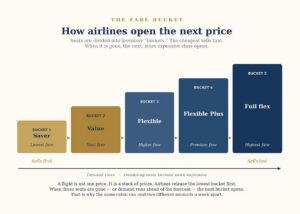
Airlines divide seats into fare classes or “buckets,” with a specific number of seats allocated to each bucket. As seats in the cheaper buckets sell out, the next tier is the only available option at a higher price. This is why the same flight can cost significantly more if you book last minute. It’s not just about airlines taking advantage; it’s about how many seats remain available in a fare class on a given flight. Of course, peak travel periods like semester breaks, Thanksgiving, Christmas, and Easter have an expected increase in demand and consistently push initial prices up, as do cultural or national holidays at your intended destination. If your dates are fixed, booking early gives you access to cheaper seat buckets before they sell out. If your dates are flexible, comparing across a range of departure days, especially in shoulder seasons, can give you significant savings.
Should I search in incognito mode?
Most airlines use sophisticated systems to track demand on dates. Flight prices will rise the more you search; as websites track your browsing, airlines can adjust fares accordingly. The evidence is mixed, but I have personally experienced price increases while searching to create urgency in one browser, while the same flight in a separate browser was still showing the initial lower price for the same flight. There are many airline websites that block browsers using VPNs for this reason. Different geographic regions can display cheaper ticket prices based on what a market can afford.
 Using incognito mode is a simple action that may help protect your pricing, but stay mindful that airlines are always improving their tracking systems. Once the architecture is visible, we are no longer entirely at the mercy of an opaque algorithm. If you want to compare prices on multiple days or multiple routes in the planning phase, I suggest using Google Flights or a service like Skyscanner. Searches using these services are not tracked with cookies and can really be useful for seeing multiple options before searching or purchasing directly on the airline’s website. Both Google Flights and Skyscanner also allow you to set up price alerts, so you will know when the best fares for your desired class of travel on your sought-after routes are available. This means you can research calmly, set an alert, and step away without feeling that curiosity itself is being punished.
This knowledge is less a set of hacks but rather a form of quiet literacy. Flexibility is its own luxury: departing a day earlier or later, choosing the best cabin, or taking the flight that lands at a civilised hour. These are not extravagances so much as choices that protect the purpose of travel itself. A good journey is never only about arriving; it is about how one moves through the world.

Ivy Mae Anderson, ELYSIAN Travel Subject Matter Expert
IG: @ivymaemae