

Article Summary: This reflection explores the life and legacy of Senator Lindsey Graham through the lens of Mark 6:4, “A prophet is not without honor except in his own town.” Drawing on observations from his memorial service at the Washington National Cathedral, the article examines public service, sacrifice, grace, and the challenge of recognizing extraordinary leadership while it is still among us.

Mark 6:4 (NIV) : “Jesus said to them, ‘A prophet is not without honor except in his own town, among his relatives and in his own home.’”
People often fail to recognize someone with extraordinary gifts or a divine calling when that person comes from their own community. Is this not a testament to who he, Senator Lindsey Olin Graham was; that the people closest to him saw him as one of their own? In South Carolina, he was called “Lindsey.” Yet on the world stage he was regarded as a consequential force in the defense of democratic allies.
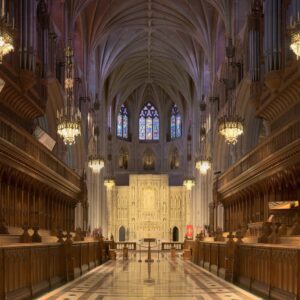 I sat in the Washington National Cathedral yesterday and watched the light fall across the stone as tributes rose for Senator Lindsey Graham. The service was intimate in its solemnity, yet global in its reach. World leaders had come. President Trump spoke. Those who had walked beside him for decades, and those who had only known him from afar, gathered under that soaring ceiling to mark the sudden close of a life spent in the public square.
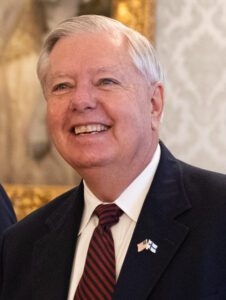 For more than three decades, Senator Graham moved through the currents of American and international life with a restless, sometimes bruising energy. Public sentiment shifted around him like weather. There were seasons of fierce criticism and seasons of unexpected alliance. He was called a warmonger by some and a peacemaker by others. He was accused of inconsistency and praised for evolution. He absorbed the meanness that public office so often invites; the cheap shots, the caricatures, the refusal to be granted the benefit of complexity. What right do we have to be so cruel when someone is giving so much?
I think of the sacrifices that accumulate quietly over a long career: the missed family moments, the constant travel, the weight of decisions that touch lives half a world away, the willingness to stand in the crossfire of opinion while still showing up for the next vote, the next hearing, the next conversation with a foreign leader whose people were under threat. He carried a particular burden for those marginalized by tyrants or invaded by force. His voice rose consistently for countries that might otherwise have been left to face darkness alone. That stance—imperfect, contested, yet steadfast—forms a large part of the legacy he leaves.
President Trump observed that Lindsey left us at the zenith of his career. I believe he could have changed still more of the world, had time allowed. Yet perhaps the truer measure is not how much more he might have done, but what he chose to do with the years he was given.
How do we measure a life well lived?
Not solely by the applause that comes when one is far from home, nor by the silence that sometimes greets a prophet in his own town. Not by the labels that cling like burrs—hawk, ally, critic, friend—nor by the shifting tides of public affection. We measure it, I think, by the consistency of care for the vulnerable, by the willingness to keep showing up when it would be easier to step aside, and by the quiet dignity with which one endures both honor and dishonor.
Can we not find a better way of treating those in public office? Can we not hold conviction without venom, disagreement without dehumanization? The suddenness of Senator Graham’s departure reminds us how fragile the stage is, how brief the performance. In that light, the mean-spiritedness and harshness we sometimes indulge in feels not only unkind but wasteful.
His lasting impact will not be settled by any single eulogy or editorial. It will be found in the countries that received support when isolation would have been easier, in the strengthened alliances, in his incredible staff and colleagues who watched him work. In the example he left us, however imperfect of a man was our Lindsay, he kept moving toward the hard conversations rather than away from them.
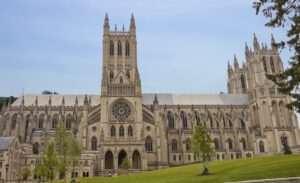
National Cathedral of Washington DC
As I left the Cathedral yesterday afternoon, the verse lingered. “A prophet is not without honor except in his own town.” Perhaps the highest honor is not the one conferred by distant admirers, but the one earned by remaining recognizably human to those who knew him longest, while still daring to act on a larger stage for those who could not speak for themselves.
May we learn, in the space he leaves behind, to offer one another a little more grace, a little more dignity, and a clearer recognition of the costly work of the public servant.
Rest in peace my friend,

ELYSIAN Publisher & Founder

What is the main message of this article?
The article reflects on Senator Lindsey Graham’s life through the biblical teaching of Mark 6:4, encouraging readers to consider how society honors public servants, extends grace, and recognizes leadership only after it is gone.
Why is Mark 6:4 significant?
Mark 6:4 reminds readers that extraordinary people are often least appreciated by those closest to them. The verse serves as the central theme for reflecting on Lindsey Graham’s public life and legacy.
Who was Senator Lindsey Graham?
Senator Lindsey Graham served South Carolina in the United States Senate for more than three decades. He was known for his work on national security, foreign policy, military affairs, bipartisan relationships, and advocacy for democratic allies around the world.
What is this article about?
This article is a personal reflection inspired by attending Senator Lindsey Graham’s memorial service at the Washington National Cathedral. It explores themes of honor, sacrifice, leadership, public service, and grace.
What lesson can readers take from Lindsey Graham’s legacy?
The article encourages readers to judge a life not by popularity or public opinion, but by consistent service, courage, compassion, and the willingness to stand for others despite criticism.