
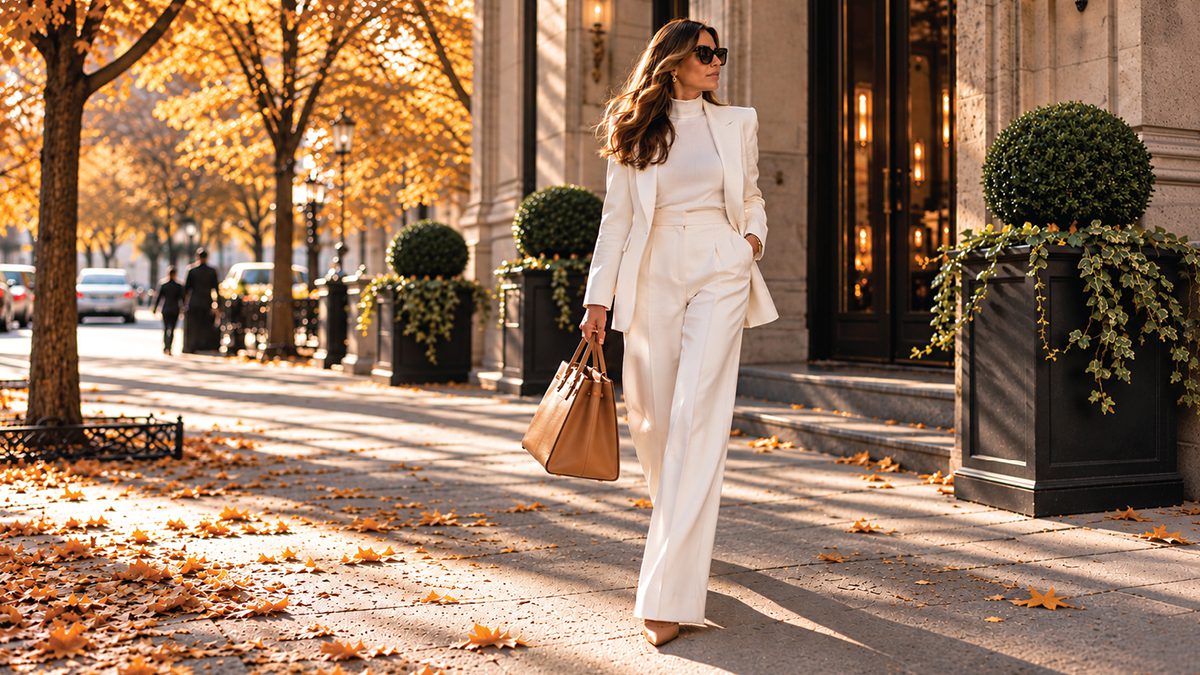
No miniskirts after 40. No white after Labor Day. No long hair after 50. For generations, women have been told what to wear, when to wear it and when they’re too old to wear it at all. But the most interesting thing happening in fashion isn’t a new trend. It’s the growing realization that the rules were never worth following in the first place.
Somewhere between learning how to dress and learning how to behave, women inherited an extraordinary collection of fashion commandments. Shoes should match handbags. Gold should never compete with silver. Hemlines should descend as birthdays accumulate. And heaven forbid someone wear white in October.
Who made these rules? More importantly, why are we still listening?
The answer reveals something fascinating about fashion: many of its supposedly timeless standards have remarkably little to do with style.
Take the prohibition against wearing white after Labor Day. Its roots lie in the social conventions of late 19th-century America, when white summer clothing became associated with leisure, seasonal wardrobes and the privileges of the wealthy. Returning to darker colors signaled a return to ordinary life. What began as a seasonal custom evolved into an unwritten dress code.
Today, winter-white cashmere, ivory tailoring and cream-colored coats make the restriction seem almost absurd. Few things look more sophisticated against a gray winter skyline than an impeccably dressed woman in white.
Then there’s the notion that miniskirts come with an expiration date.
The miniskirt became a symbol of youthful freedom in the 1960s, challenging conventional ideas about femininity and propriety. Yet somewhere along the way, liberation acquired an age limit. Forty became an imaginary deadline, as though confidence and beautiful legs suddenly became incompatible with maturity.
The irony? Personal style often becomes more compelling with age, not less.
Long hair has suffered a similarly ridiculous restriction. For decades, shorter hairstyles were promoted as more appropriate for mature women, reflecting traditional expectations of respectability and the belief that aging required a more subdued appearance.
But silver hair cascading over a beautifully tailored jacket can be infinitely more striking than a haircut chosen simply because someone reached a particular birthday.
Even jewelry has been subjected to unnecessary discipline. The insistence that gold and silver must remain separate reflects an older preference for carefully coordinated accessories. Yet mixing metals creates depth, contrast and individuality. The most memorable jewelry collections rarely look as though they were purchased together.
And double denim? Once dismissed as a fashion faux pas, the combination has transcended its workwear origins to become a recurring runway favorite. The secret was never avoiding denim on denim. It was understanding proportion, texture and silhouette.
Perhaps the most revealing rule is the insistence that handbags must match shoes. Once considered the hallmark of a polished appearance, perfect coordination can now feel predictable. An unexpected bag, a contrasting shoe or an unconventional accessory often makes an outfit far more interesting.
Of course, there’s nothing wrong with matching accessories, wearing shorter hair or choosing a longer hemline. The problem begins when personal preferences become universal prescriptions.
And therein lies fashion’s most important distinction: elegance is not obedience.
The women with the most captivating style understand that getting dressed is an act of self-expression, not a test of compliance. They know what flatters them, what excites them and, perhaps most importantly, what feels unmistakably their own.
Because the ultimate fashion statement isn’t breaking the rules simply to prove you can.
It’s reaching a point where you no longer need anyone else’s permission to decide what looks beautiful on you.