
Nature has its own rhythm and pace that cannot be hurried or slowed. The only discipline required is the willingness to stay long enough for the soul to notice.”
— Karen Floyd,
ELYSIAN Publisher and Founder

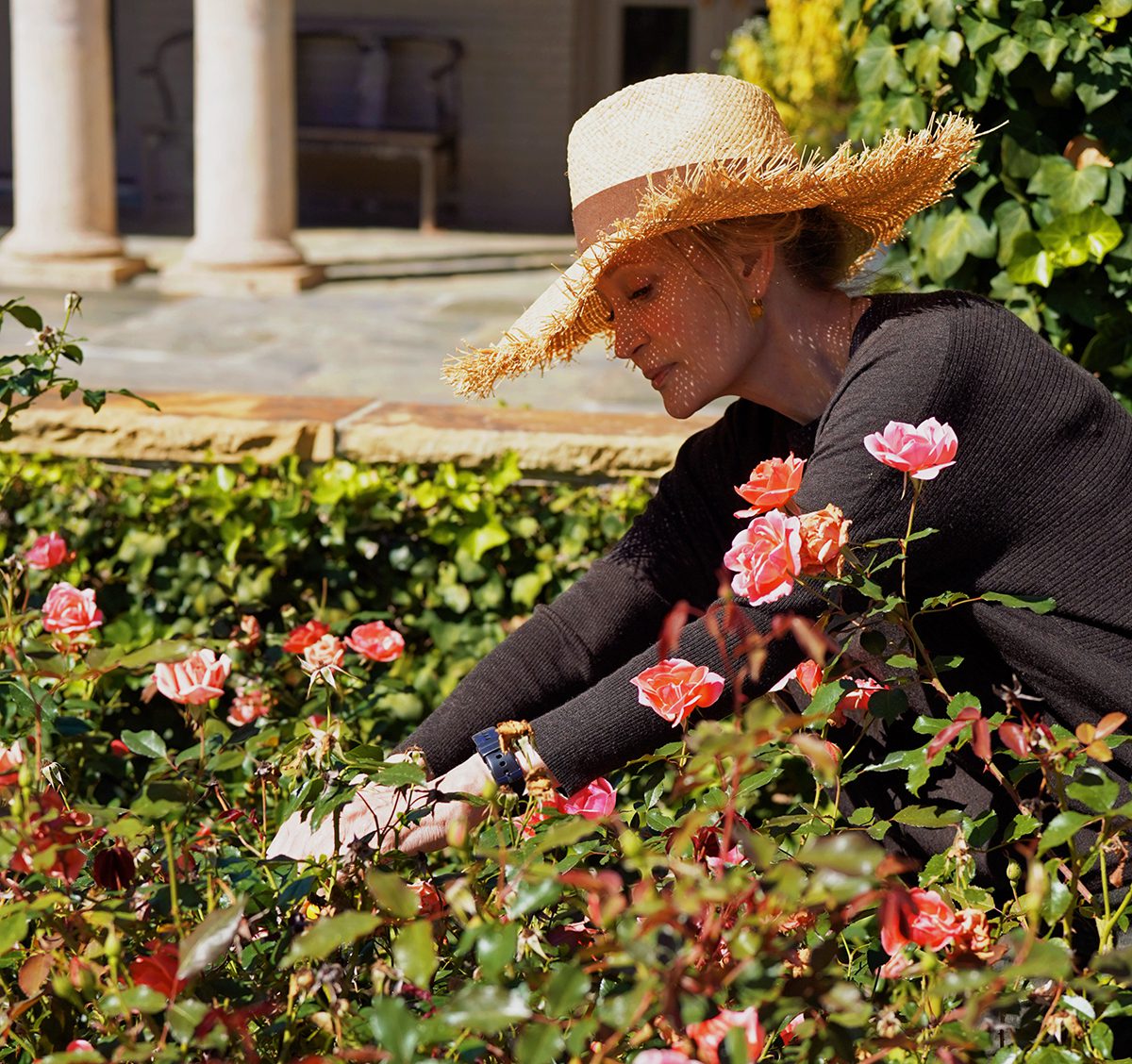
This morning was still damp from the night before as I stepped outside with my four-legged companions Tar and Buddy, the same way I have begun to insist on doing most days as I run the Cottonwood trails. The first thing I registered was the particular chill underfoot and the green, mineral smell of dew-soaked grass in that sharp early-autumn cold. Much like running, I have grown to love gardening because it forces us to stay in the moment.
In contrast, is the device within reach; the next thought already forming. Even when we cross the threshold of the house, the mind continues its commentary. But nature will not accommodate the habit. The birds do not wait for us to finish a sentence. The scent of wet grass fades as the sun climbs. The rinsed air of a cold morning has a brief, unmistakable clarity. These are not backdrops. They are a quiet demand that the whole of us be present or miss them entirely.
We are skilled at distance. We can hold the world’s pain at arm’s length, and we can hold the morning at arm’s length too—the cold air, the wet grass, the first birds. Nature is one of the few things that still refuses to let us stay there. Women have always known this. At a visceral level we understand that presence is not a luxury; it is the condition from which anything lasting—love, repair, peace—can begin. The power that distracts us is not only external. It is the quieter power of the habit that keeps us elsewhere. Nature interrupts it without argument.
I used to believe the practice was mainly restorative. Then I noticed what it quietly requires. You cannot receive the morning and still remain insulated from the day that follows. The same willingness to stay, to notice, to refuse the easier distance, is the willingness that makes it harder to look away from anything else that is alive and in need of attention.
The birds do not ask us to solve the world. They only ask that we be here. And once we are here, the rest becomes harder to ignore.
With much love,
Karen Floyd,
ELYSIAN Publisher & Founder