

Money has always been more than currency. It is access, influence and the freedom to decide what comes next. For generations, women were expected to operate within financial systems they had little power to shape. Yet a remarkable group refused to accept those boundaries. They challenged Wall Street, built financial institutions where none existed for their communities and transformed who could participate in the creation of wealth.
Their stories are not simply about fortunes accumulated. They are about power redistributed.

Muriel Siebert, Wall Street Advertisement
Muriel Siebert: The Woman Who Bought Her Way Onto Wall Street
When Muriel Siebert set her sights on the New York Stock Exchange, she confronted a financial establishment that had operated for 175 years without a permanent female member. Rather than wait for Wall Street to welcome her, she decided to purchase her place in it.
On December 28, 1967, Siebert became the first woman to own a seat on the NYSE, joining a trading floor of 1,365 men. Her admission was hard-won, requiring her to navigate institutional resistance and secure financing for a membership that carried both enormous cost and symbolic weight.
But breaking the barrier was only the beginning. In 1975, when brokerage commissions became negotiable, Siebert turned her firm toward discount brokerage services, helping make investing more accessible to ordinary customers rather than reserving favorable pricing for major commercial clients. She later became the first woman to serve as New York State’s superintendent of banks.
Siebert did more than enter a room from which women had been excluded. She challenged the economics of the room itself.
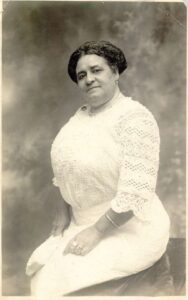
Maggie Lena Walker, founder of St. Luke Penny Savings Bank in Richmond, VA
Maggie Lena Walker: Building a Bank Where One Was Needed Most
For Maggie Lena Walker, financial independence meant something more fundamental: the ability to build wealth in a community systematically denied economic opportunity.
The daughter of a formerly enslaved woman, Walker rose through the Independent Order of St. Luke, a fraternal organization serving African Americans. In 1903, she founded the St. Luke Penny Savings Bank in Richmond, becoming the first Black woman in the United States to charter a bank.
At a time when racial discrimination restricted access to credit, banking and business ownership, Walker created an institution designed to help Black families save, borrow and invest in their futures. Her vision extended beyond deposits and loans. Financial literacy, employment and community ownership were interconnected tools for building lasting independence.
Her achievement reframed banking as more than a business. It could be an instrument of collective advancement, giving people the resources to create opportunities for the next generation.

Mary Roebling, First female President of Trenton Trust, New Jersey
Mary Roebling: The Woman Who Led a Major Bank
When Mary Roebling became president of Trenton Trust in 1937, she entered another arena where women rarely held the highest financial authority. She would later become the first woman governor of the American Stock Exchange in 1958.
Her career challenged the assumption that women could participate in financial institutions without being qualified to lead them. Banking leadership meant overseeing capital, evaluating risk and making decisions that affected businesses and communities.
Roebling’s rise expanded the possibilities for women in executive finance, demonstrating that leadership was not confined to the traditional male establishment.
The common thread connecting these women is not simply ambition. It is their refusal to accept that access to money, markets or financial decision-making should depend on gender.
Each changed a different part of the system. Siebert opened Wall Street’s doors and challenged brokerage conventions. Walker built an institution to serve people excluded from mainstream finance. Roebling broke through to the highest levels of banking leadership.
Their legacies remind us that financial progress is not measured only by the fortunes individuals accumulate. It is also measured by who gains the opportunity to participate, who gets to make consequential decisions and what becomes possible for those who follow.