

In a beauty industry where the newest treatment often comes with the highest price tag, knowing what deserves your money may be the most valuable beauty secret of all.
The beauty industry has perfected the art of convincing women that looking younger requires spending more. But what if the smartest $10,000 beauty investment isn’t the newest laser, the most expensive injectable or the procedure everyone is talking about? What if the real secret is knowing what not to spend your money on?
With an endless stream of treatments promising tighter skin, fewer wrinkles and a more youthful appearance, it’s remarkably easy to spend thousands without a meaningful long-term strategy. The difference between spending money on beauty and investing in it comes down to three things: prevention, precision and restraint.
If I had $10,000 to invest in my appearance, I wouldn’t spend it on a dramatic transformation. I would distribute it strategically throughout the year, prioritizing skin health, collagen support and natural-looking results.
Here’s where my money would go:
$1,000 | The Foundation: Skincare and Sun Protection
Before investing in a single procedure, I would establish a consistent skincare routine. Daily broad-spectrum sunscreen is nonnegotiable. A vitamin C serum, hydrating products and other ingredients selected for individual skin concerns can help support a healthier-looking complexion.
While I favor EltaMD for sun protection, the brand matters less than finding a sunscreen you’ll actually wear consistently. Expensive skincare is not automatically superior, and even the most sophisticated treatment cannot replace daily protection against ultraviolet damage.
$3,000 | The Heavy Lifters: Skin-Quality Treatments
This is where I would allocate the largest portion of my budget. Depending on individual concerns, fractional lasers, intense pulsed light (IPL) or microneedling may offer meaningful improvements in skin texture, pigmentation and the appearance of fine lines.
But these treatments aren’t interchangeable. IPL may be appropriate for certain pigmentation and redness concerns, while fractional lasers and microneedling address different aspects of skin quality. An experienced medical provider should determine which approach offers the greatest benefit with the least unnecessary risk.
The goal isn’t to undergo more procedures. It’s to choose the right ones.
$2,000 | The Art of Restraint: Strategic Injectables
Injectables can be valuable tools, but more is rarely the objective. Neuromodulators such as Botox can soften expression lines, while carefully placed hyaluronic acid fillers may address selected areas of volume loss.
The most sophisticated results preserve facial movement, proportion and individuality. I would rather invest in conservative, thoughtfully timed treatments than pursue dramatic changes that compromise the features that make a face distinctive.
$2,000 | The Long Game: Collagen-Focused Treatments
Collagen production naturally changes with age, making treatments designed to support skin structure worth discussing with a qualified provider.
Depending on skin condition and individual goals, collagen-stimulating options may complement an existing treatment plan. However, not every patient needs them, and this allocation should not duplicate procedures already included in the skin-quality budget.
$2,000 | The Smartest Reserve: Reassessment and Refinement
Perhaps the most overlooked beauty investment is the money you don’t immediately spend.
I would reserve $2,000 for follow-up evaluations, maintenance and adjustments based on actual results. Skin changes, priorities evolve and treatments require different recovery periods. A flexible budget allows decisions to be guided by results rather than marketing, trends or the pressure to use every available dollar.
What I Wouldn’t Spend My Money On
I wouldn’t chase every emerging treatment, assume a higher price guarantees a better outcome or invest in procedures simply because they’re popular.
I would also question any provider who recommends an aggressive treatment plan without considering medical history, skin type, realistic expectations and potential complications.
The most effective beauty strategy isn’t necessarily the most elaborate. Sometimes the smartest decision is to do less.
Ultimately, the greatest return on a $10,000 beauty investment isn’t a dramatically different face. It’s healthier-looking skin, thoughtful long-term care and the confidence that comes from making informed choices.
Because the real art of aging beautifully isn’t spending whatever it takes to turn back the clock. It’s knowing which investments are worth making, which ones to walk away from and recognizing that looking like yourself is never something you need to correct.
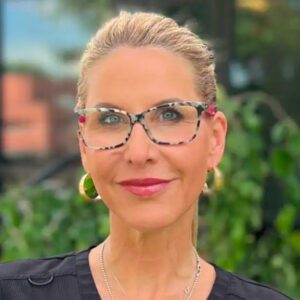 by by Shani Caviness PA-C, ELYSIAN Beauty Subject Matter Expert, IG: @ellacorequeen