
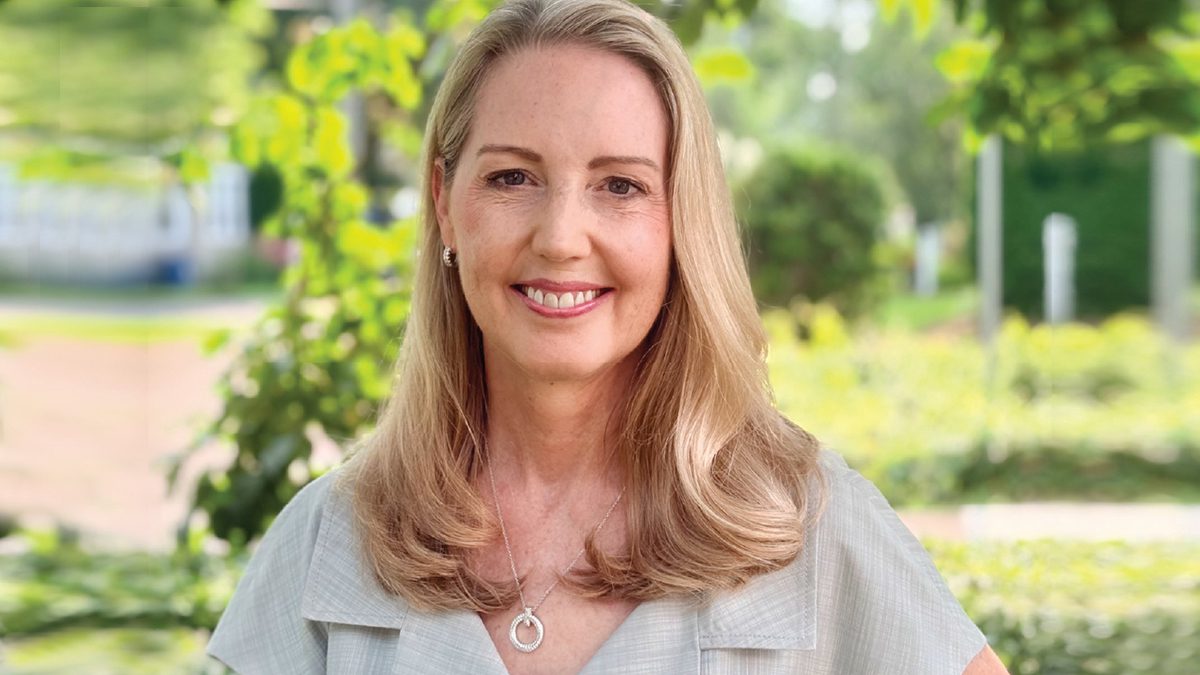
Five years after her breast cancer diagnosis, Catherine Edwards has learned that life after cancer does not always mean returning to the life you knew before. Sometimes, it means accepting what has changed, discovering what matters most, and learning to appreciate the blessings that were there all along.
In October 2021, Catherine Edwards began a journey that would change her understanding of health, work, family, and the future. When she shared her story in Keeping It Normal, she described her determination to continue living as normally as possible while undergoing treatment for triple-negative breast cancer. Looking back, she has no regrets about that approach.
When asked what she would tell the woman who wrote Keeping It Normal during treatment five years ago, Catherine’s answer is simple: “I would tell her that she absolutely chose the right path for her.”
At the time, her treatment involved chemotherapy and immunotherapy, followed by surgery and radiation. She continued working and caring for her family, doing her best to keep her cancer diagnosis from becoming the center of her life. But the transition to life after treatment brought an unexpected complication.
Catherine developed pembrolizumab-induced adrenal insufficiency, a rare, potentially life-threatening side effect of immunotherapy that left her body unable to produce cortisol. She now takes daily corticosteroids to replace the hormone and must adjust her medication when her body experiences additional stress. The condition is lifelong and requires ongoing attention.
Initially, she tried to resume her life as an executive, wife, and mother just as she had before cancer. But managing the demands of her CEO role eventually required unsustainable levels of medication. After consulting with her doctors and husband, she made the difficult decision to medically retire in fall 2024.
“After a lifetime of striving for that next rung up the ladder professionally, the idea of stepping off the ladder completely was both scary and intimidating,” she reflects.
It was another lesson in creating a new normal, one that required her to reconsider what a fulfilling life could look like beyond professional achievement.
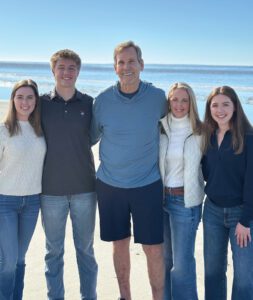 Today, Catherine spends her time serving on philanthropic boards, traveling, reading, and enjoying family and friends. Her two English Springer Spaniels, Rosie and Remi, are never far from the picture. She has found a different rhythm, one that allows her to focus on the things that bring meaning to her days.
 Her approach to health has evolved, too. She is more conscientious about nutrition, incorporates strength training, meditation, and assisted stretching into her routine, and remains vigilant about recommended cancer screenings. Although learning to trust her body again has taken time, she finds comfort in reaching significant milestones.
As of October 2026, she is officially five years beyond her original breast cancer diagnosis.
Perhaps the most meaningful change, however, has been in her perspective. During treatment, she was focused on the physical toll of cancer and its associated therapies. With time, she has come to recognize how positively the experience affected her spiritual well-being.
She also understands differently something many of us take for granted: the assumption that tomorrow will always come.
Catherine still has hopes for the future, including seeing her children marry and have families of their own. But she makes a conscious effort to live in the present and appreciate the blessings in her life today.
“Cancer teaches you that none of us are guaranteed tomorrow, so we need to appreciate today,” she says.
For women newly diagnosed with breast cancer, her advice is straightforward: learn about your diagnosis, find an experienced oncologist who specializes in it, maintain healthy habits, and take the journey one day at a time.
Living from a position of strength, she explains, means making the most of each day without allowing fear and anxiety about things beyond our control to rob us of joy.
Five years later, Catherine’s story is not about returning to the life she had before cancer. It is about recognizing that life can still be meaningful when the path changes, that strength can include knowing when to step away, and that gratitude becomes all the more powerful when we understand how precious the present truly is.