
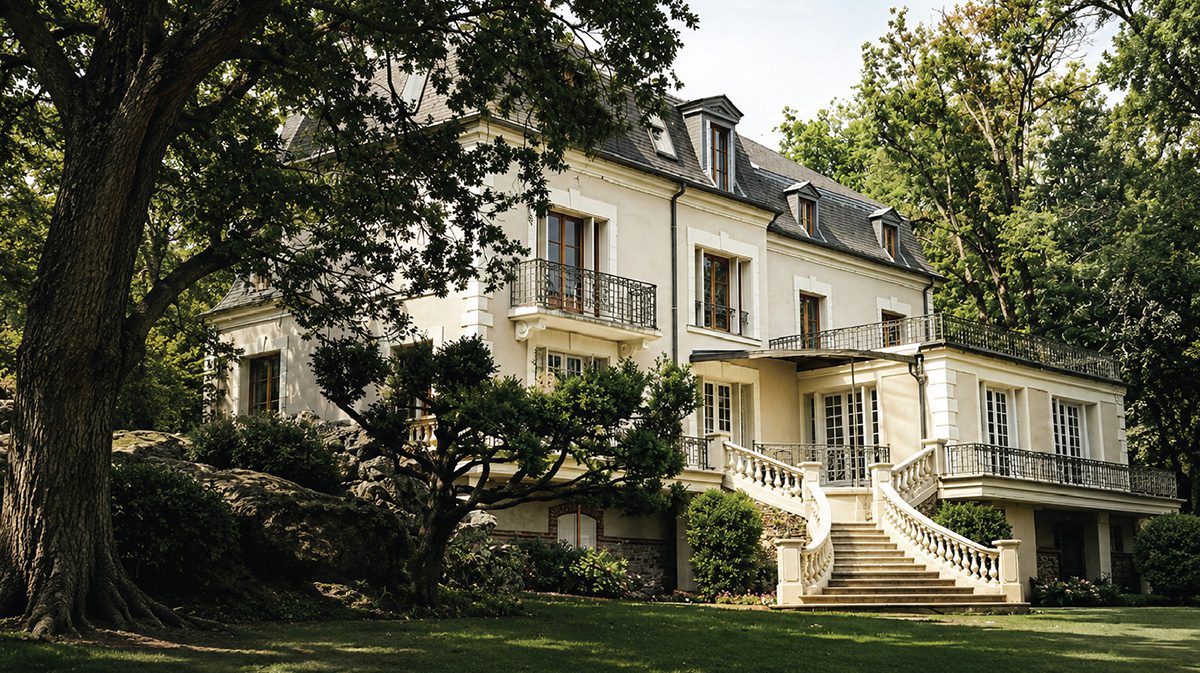
A renovated kitchen may impress a buyer. But one of the most valuable features of a property could be standing quietly outside, growing more valuable with every passing year: a mature tree.
How Mature Trees Influence Property Value
Research suggests that trees can contribute meaningfully to residential property values. A U.S. Forest Service national analysis, examining 21 studies and 157 observations across the United States, confirmed an association between tree canopy and home values. The effect, however, varies according to location, surrounding canopy and other property characteristics.
A particularly striking example comes from Athens, Georgia. In a study examining 844 home sales, researchers found that landscaping with trees was associated with residential sale prices 3.5% to 4.5% higher. The sales occurred between 1978 and 1980, making this a historical finding rather than a prediction of today’s market. Nevertheless, on a $700,000 property, a comparable 3.5% difference would represent $24,500. The study does not establish that an individual tree accounts for that increase, but it illustrates the potential financial significance of a thoughtfully maintained landscape.
Not all trees contribute equally to property value. Species, maturity, health, placement, canopy size, useful life expectancy and overall landscape design all influence a tree’s contribution. A healthy, mature shade tree that frames a home, provides privacy or cools an outdoor living area offers benefits that a newly planted replacement may take decades to replicate. Its appraised value, however, should not be confused with the amount a buyer will necessarily pay.
The Benefits of Trees Extend Beyond Curb Appeal
The benefits extend beyond resale. Trees provide shade that can reduce heat around a home and lower cooling demand, intercept rainfall, filter certain air pollutants, support wildlife and help soften surrounding noise. A well-designed tree canopy also makes outdoor spaces more comfortable and inviting, adding environmental and practical value that may not appear as a separate line on a real estate listing.
 Why Proper Tree Pruning Protects Your Investment
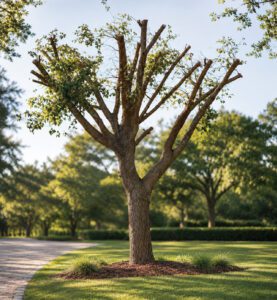
Unfortunately, homeowners can unintentionally undermine these benefits through improper landscaping practices. One of the most damaging is tree topping, the cutting back of major limbs or a tree’s crown to reduce its height. Topping is not proper tree pruning. It creates large wounds, encourages weakly attached shoots and can compromise a tree’s long-term structural integrity.
University of Florida professor Ed Gilman, whose research has helped shape professional arboriculture practices, emphasizes developing strong tree structure early. His guide to pruning shade trees recommends maintaining a dominant trunk, appropriately spacing major branches and anticipating mature growth to avoid unnecessary large-scale branch removal later.
Construction and routine yard maintenance can also threaten mature trees. Cutting roots, changing soil grades, compacting soil with heavy equipment, piling mulch against trunks and striking bark with lawn equipment can cause significant damage, sometimes long before visible decline begins.
Proper structural pruning can also improve a tree’s ability to withstand severe weather. A University of Florida study of seven broad-leaved species following Hurricane Andrew reported survival of 73% among properly pruned trees, compared with 47% among unpruned trees. Although proper pruning cannot guarantee storm survival, the findings reinforce the importance of preventive tree care.
Protecting Mature Trees for the Long Term
The smartest investment begins with understanding what already grows on your property. Before removing or substantially pruning a mature or significant tree, consult an ISA Certified Arborist. Protect its root zone from construction traffic, avoid altering soil grades beneath the canopy and request a pruning plan appropriate to the tree’s species, age and condition.
A renovation can transform a room in a season. A mature tree represents decades of growth, and no landscaping budget can instantly replace that time. Before investing in what is inside your home, take a closer look at what is growing outside. It may be one of your property’s most valuable assets.