
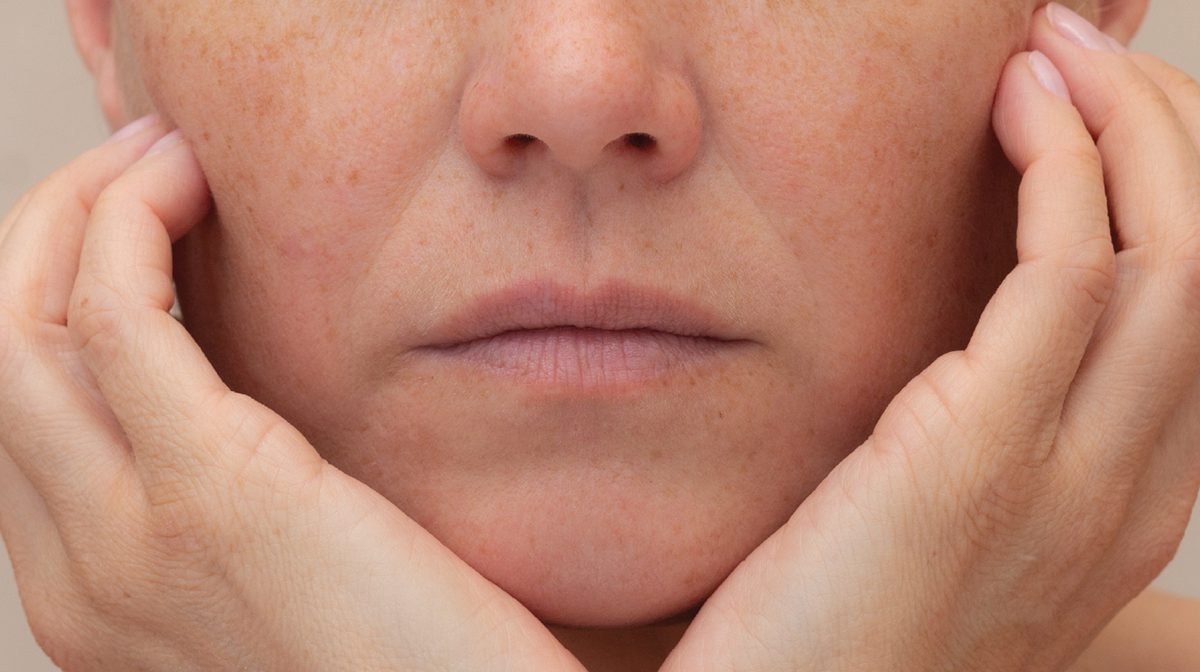
A visible shift toward authenticity has permeated nearly every sector over the past six years. Brands have moved away from the constructed glossy, airbrushed, and perfected image. Instead, we see a move toward something that signals a more “real” end product. This stylistic pivot reflects a deeper change of cultural values. Perfect is no longer the goal, and imperfection has become a form of consumer currency.
This shift accelerated in the wake of COVID-19, a global event that reshaped how individuals engaged with media and one another. As people spent more time at home, social media became a tool for connection. Consumers began to seek transparency as a response to a collective experience. The highly edited images that once dominated began to feel increasingly out of step with lived reality. Few industries felt this shift as much as beauty. For decades, skin was not lived in as it was corrected and erased. Yet perfect skin, once desirable, began to read as generic. What has emerged is not a rejection of beauty, but a new ideal of beauty.
Skin is now presented with visible pores, fine lines, freckles, and wrinkles. Influencers test products without the overt scaffolding of production teams, filming in their bathrooms under lighting that mimics everyday conditions. The viewer is invited into a space that feels familiar as if you are on a video chat with a friend. We see ourselves reflected in this new form of marketing and, in turn, we see our skin. Or, perhaps more accurately, we are invited to believe we do.
Because while the large-scale production set may be absent, the intention remains. The carefully designed Instagram story and vulnerability are not accidents. Lighting, casting, and post-production choices become ideological, aesthetic decisions. To embrace real skin is to reject the safety of perfection and engage with a more complex, and more resonant visual language.
A glance through an art historical lens reveals that the celebration of imperfect skin is not new. In the work of Peter Paul Rubens, artist from the Baroque period, flesh is rendered with cellulite, dimples, and imperfections. Rubens did not obscure these qualities, but rather emphasized them through his use of light and composition. His figures embody a visual language of drama, theatrics, and realism. A visual language that was utilized to move audiences and aid in persuasion for the aristocracy. The women in Ruben’s work, and the way he illustrated them, served a purpose. Rubens utilized imperfections in the skin as a tool. Texture and irregularity were not treated as flaws to be corrected, but as assets to be used to communicate with the viewer.
In many ways, this mirrors our current moment. Texture now signals something beyond aesthetics: authenticity, confidence, even cultural alignment. Just as Rubens used the body to communicate vitality and power, contemporary visual culture is beginning to use skin as a site of expression. The emphasis now is on the real. Once categorized as flaws, texture is reconceptualized as a marker of transparency. Wrinkles function as visual cues, signaling to the consumer that a brand is authentic, trustworthy, and aligned with contemporary values. In this way, skin becomes a tool: a surface through which broader cultural meanings are communicated. Controlled imperfection, paradoxically, has become the most refined aesthetic choice. These once imperfections become badges of life. Each laugh line becomes a symbol of the full life you are privileged to experience.

Taylor Emmons
CEO and Founder of Tailored Impact: An Art and Culture Firm
Contact information: taylor.emmons@tailoredimpactllc.com
Instagram: tailored impact.firm